coffee
2026/03/06

When you buy a bag of coffee that promises “single origin” and a neat QR code you can scan, how sure are you that the story matches what’s actually in the cup? Coffee travels through many hands—from farm to mill to exporter to roaster—and every handoff is a chance for details to get lost, simplified, or intentionally “polished.” Blockchain can help by keeping a tamper-resistant timeline of events, but it can’t magically guarantee that the information uploaded is accurate in the first place. In other words: traceability isn’t automatically trust.
This is where pairing AI with blockchain changes the game. In this article, we’ll apply lessons from a trust-management approach like TrustChain (a framework built to improve data trustworthiness in blockchain-based supply chains) to coffee—because immutable records still need mechanisms to manage trust when actors can upload low-quality or misleading data. We’ll go beyond “scan-to-story” QR codes and look at how traceability can become auditable, decision-grade provenance: not just where the coffee went, but how confident we should be in what each record claims.
The core idea is simple: blockchain can provide tamper-resistant event logs, while AI can act as the quality layer—using data from farming, processing, and shipping to flag inconsistencies, predict quality risks, and support clearer decisions. But even with smarter scoring and automation, governance still matters: who is allowed to record what, how disputes are handled, and how social responsibility is verified. From farm to roast, the goal isn’t just to track coffee—it’s to earn trust in every sip.
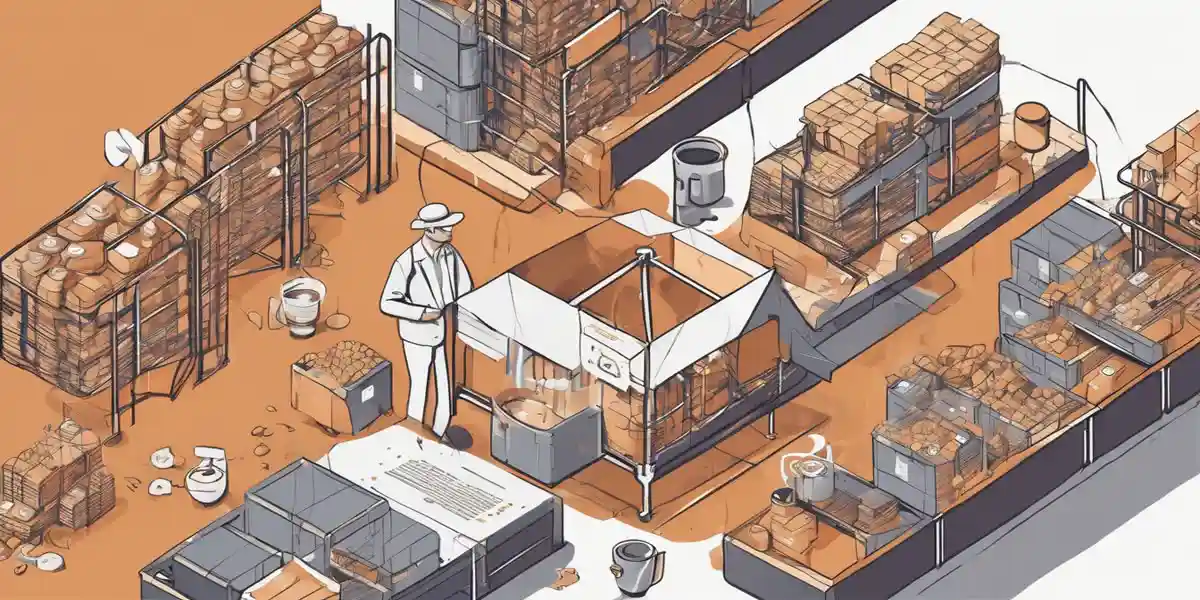
Blockchain (a shared digital ledger system) is great at making entries hard to change after the fact. Once a harvest lot ID, a “washed” processing claim, or a shipping handoff is recorded, it becomes tamper-resistant—meaning it’s much harder for someone to quietly rewrite history later.
But coffee traceability doesn’t fail only when someone edits the past. It also fails when someone uploads the wrong thing in the first place—whether by mistake (“we selected the wrong lot number”), by incentives (“make the grade look better”), or by ambiguity (“our definition of ‘specialty’ isn’t your definition”). According to the study “TrustChain: Trust Management in Blockchain and IoT supported Supply Chains”, blockchain can provide tamper-proof traceability, but it does not inherently solve the problem of data reliability. In plain terms: the ledger can faithfully preserve a lie.
Here’s what “immutable but untrustworthy” can look like in real coffee workflows—without anyone “hacking the blockchain”:
Example 1: The farm-level quality claim that can’t be audited later.
A producer or cooperative uploads a quality note (for example, a cupping score, grade, or defect count) to the ledger alongside a lot. Even if the score is inflated or based on inconsistent sampling, blockchain will preserve it permanently. If a roaster later finds the cup doesn’t match the claim, the record is still “verifiable” in the narrow sense (it’s there, unchanged)—but not necessarily trustworthy.
Example 2: Processing-method “story upgrades.”
A lot is recorded as “honey” or “anaerobic” because those words sell, but the processing reality is messier (mixed fermentation times, incomplete separation of lots, or marketing language used as a shortcut). The ledger creates a clean timeline, yet the inputs may be vague, cherry-picked, or simply wrong. This is especially risky when customers treat “recorded on blockchain” as proof of authenticity.
Example 3: Chain-of-custody events that are technically correct but misleading.
A handoff event (farmer → local collector → exporter → warehouse) can be recorded accurately while still hiding meaningful quality factors—like storage humidity spikes, partial re-bagging, or lot mixing. The “who had it when” may be immutable, but the “what happened to quality” might be under-reported because no one is rewarded for logging bad news.
To make “farm to roast” records decision-grade (useful for buying, QC, and customer trust), you need a way to judge the reliability of the data and the reliability of the actors—not just preserve timestamps. The paper “TrustChain: Trust Management in Blockchain and IoT supported Supply Chains” proposes a three-layer trust management framework designed for blockchain-based supply chains specifically because traceability alone doesn’t solve data reliability.
One of the key ideas is a trust-management layer that tracks interactions and dynamically assigns trust/reputation scores—evaluating both commodity quality and the trustworthiness of supply-chain entities. Applied to coffee, that means the system doesn’t treat every uploaded claim as equal. Over time, it can learn patterns like:
This is not about “punishing” people—it’s about making the digital thread reflect reality closely enough that roasters can act on it (and consumers can believe it) without blind faith.
A common fear with reputation systems is that they become subjective (“who’s liked”) rather than evidence-based (“who’s accurate”). TrustChain’s framing matters here because it ties trust to observed interactions and outcomes, not just social ratings. In coffee terms, trust signals can be grounded in operational cross-checks, such as:
The practical payoff: roasters get a ledger that doesn’t just say “an event happened,” but helps answer “how much should I trust what was logged—and by whom?”
The more data is captured automatically, the fewer opportunities there are for “creative data entry.” AI can help convert messy real-world signals into more objective records—especially when paired with sensors and consistent measurement routines. The paper “Toward On-Device AI and Blockchain for 6G-Enabled Agricultural Supply Chain Management” describes an architecture that integrates AI and blockchain for agricultural supply chain management to improve traceability and efficient tracking. Translated to coffee, this points toward workflows where:
Even with better trust tooling, it’s worth remembering that digitizing supply chains changes who gets visibility and influence. The article “Digital extraction: Blockchain traceability in mineral supply chains” introduces the concept of “digital extraction” to describe how digital traceability data can be collected, analyzed, and instrumentalized. In coffee, the parallel risk is that small producers are asked to provide more and more data (photos, timestamps, detailed process logs), while the value of that data—pricing power, buyer leverage, market access—doesn’t flow back fairly.
That’s another reason trust management matters: it’s not only about catching “bad actors.” It’s also about designing incentives and governance so that high-quality, honest reporting is rewarded—and so the system doesn’t become a one-way surveillance pipeline where upstream actors do the work and downstream brands capture the trust benefit.
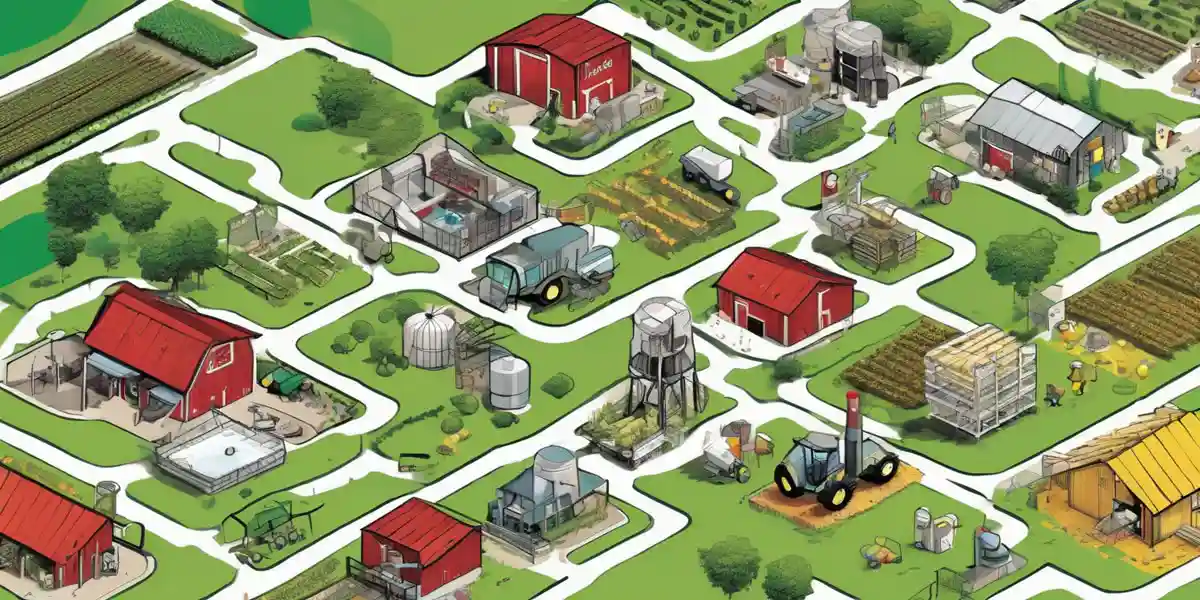
A QR code on a coffee bag can be a great doorway into the coffee’s story: the farm name, the variety, a few photos, maybe a timeline of harvest and roast. But most “scan-to-story” experiences are built like marketing pages—helpful for context, not strong enough for operational decisions.
Decision-grade provenance means the information is reliable enough to answer questions that change what you do next, such as:
In other words: the goal isn’t “a story you can scan.” It’s an auditable chain of custody and condition that supports buying, QC, compliance, and customer trust—not just a nice narrative.
To go beyond QR codes, the digital thread needs to behave like a real audit trail: each key step creates a record that is consistent, time-ordered, and linked to the previous step. In coffee terms, that means moving from loosely connected notes to a structured event log—things like:
Blockchain (a shared, tamper-resistant digital ledger) is useful here because it makes the record harder to change after the fact. But it’s important to be clear-eyed about what that does—and doesn’t—solve. According to the study “TrustChain: Trust Management in Blockchain and IoT supported Supply Chains”, blockchain can provide tamper-proof traceability, but it does not inherently solve whether the original inputs are reliable. That’s exactly why “decision-grade” requires more than just putting events on-chain.
Most coffee supply chains don’t fail at traceability because people are bad—they fail because data is fragmented. Paper forms, spreadsheet exports, WhatsApp messages, inconsistent lot naming, and missing timestamps are normal. AI can help by turning that mess into standardized, auditable records—especially when paired with sensors and edge devices.
One practical direction is “on-device AI” (AI that runs directly on phones, scanners, or field devices) that can validate and format data at the moment it’s captured—before it becomes an error that propagates downstream. The paper “Toward On-Device AI and Blockchain for 6G-Enabled Agricultural Supply Chain Management” proposes an architecture that combines AI, blockchain, and tools like UAVs (drones) for agricultural supply chains to improve traceability, tracking, and operational coordination. You don’t need “6G drones everywhere” to benefit from the core idea: capture data closer to the source, standardize it immediately, and anchor it into a shared ledger so it stays connected to the lot’s identity all the way to roast and packaging.
Problem: Lots get renamed across intermediaries (farm ID becomes exporter code becomes importer SKU). A QR story can still look coherent because it’s curated—but the operational link can break when you try to reconcile inventory, quality results, and roast batches.
Beyond QR approach: Create a persistent digital lot identity and record each transformation (split/merge/rebag) as an event. The QR code on the retail bag becomes just a pointer to that audit trail, not the trail itself. The value is that the roaster can answer: “Which exact green-lot events map to this roast batch?” without manual detective work.
Problem: Traditional traceability often proves path (who touched it) but not conditions (what happened to quality risk along the way). That’s why many QR experiences feel like travel diaries rather than quality tools.
Beyond QR approach: Store condition checkpoints as first-class events in the timeline (e.g., storage location changes, container handoffs, warehouse intake). AI can then compare expected vs. observed patterns and flag anomalies for QC review—turning provenance into something you can act on (e.g., “sample this lot earlier,” “hold it from a premium release,” “adjust roast development”).
This is where a shared ledger helps: you’re not just collecting condition notes—you’re connecting them to the exact lot ID and downstream roast batches in a tamper-resistant way.
Problem: Once you instrument a supply chain, you don’t just get traceability—you get a lot of data about people’s work, timing, and performance. The article “Digital extraction: Blockchain traceability in mineral supply chains” introduces the concept of “digital extraction”: collecting and instrumentalizing digital data through blockchain-enabled traceability. While this paper is focused on mineral supply chains, the caution carries over to agricultural products like coffee: traceability systems can shift power toward whoever controls data access and analytics.
Beyond QR approach: If you want “trust in every sip,” your provenance design should explicitly define who can see what. For instance, a consumer-facing scan might show the story and high-level milestones, while buyers and QC teams get deeper audit details, and sensitive operational metrics remain permissioned. This makes provenance both auditable and fair: credible enough for accountability, but not a tool for unnecessary surveillance.
When roasters move beyond QR codes, the QR becomes the interface—not the system. Underneath, you need a provenance stack that:
This is how “scan-to-story” becomes auditable, decision-grade provenance: not a prettier webpage, but a verifiable operational backbone that connects farm decisions, logistics realities, roasting execution, and customer transparency in one continuous thread.

Most coffee traceability efforts do a decent job answering “Where did this come from?” but struggle with the harder question: “How good was it at each step, and can we trust the record?” Coffee quality can change between harvest, processing, storage, shipping, and roasting—yet those changes often live in disconnected spreadsheets, emails, or private databases. Even when a blockchain (a shared, tamper-resistant digital ledger) is used, there’s a key limitation: it can lock records in place after they’re written, but it can’t magically ensure those records were true in the first place.
According to the study “TrustChain: Trust Management in Blockchain and IoT supported Supply Chains”, blockchain can provide tamper-proof traceability, but it does not inherently solve data reliability. For coffee, that means a ledger can faithfully preserve an entry like “stored at proper conditions” even if the storage was actually too humid—unless the system has a way to evaluate whether the data source is credible.
To move from “storytelling” to “quality proof,” you need a way to judge both (1) the coffee’s condition/quality and (2) the reliability of the actors and devices reporting it. The “TrustChain: Trust Management in Blockchain and IoT supported Supply Chains” paper proposes exactly this kind of approach: a three-layer trust management framework built on top of a blockchain-based supply chain. In plain terms, it adds a structured method to track interactions and dynamically assign trust/reputation scores—covering both commodity quality and the trustworthiness of supply-chain entities.
In a coffee context, this is what that looks like in practice:
Example 1: Green coffee intake that flags risk before it hits the roaster. A roaster receives two lots that both claim the same origin and processing method. On a basic traceability system, they look equally “legit.” With a TrustChain-style trust layer, the lot from an exporter/warehouse with a stronger reliability history can be treated as lower risk, while a lot coming through an actor with weaker trust signals can be routed to additional checks (more sampling, more stringent acceptance criteria) before committing it to a flagship SKU.
Example 2: Linking storage/shipping handling to later quality outcomes. If a coffee consistently arrives tasting aged or shows defects that correlate with certain routes or facilities, a trust-managed ledger can help separate “normal variability” from “repeatable handling issues.” Over time, the system’s trust scoring can reflect which intermediaries’ recorded handling events are dependable indicators of final quality—and which ones are not—based on repeated supply-chain interactions, as described in “TrustChain: Trust Management in Blockchain and IoT supported Supply Chains.”
Example 3: Farm-side data capture that doesn’t require constant connectivity. Coffee origins often struggle with connectivity and infrastructure, which is why “collecting data in the field” is frequently where traceability projects fail. The paper “Toward On-Device AI and Blockchain for 6G-Enabled Agricultural Supply Chain Management” proposes an architecture that integrates AI, blockchain, and tools like UAVs (drones) in agricultural supply chains to support traceability, transparency, and efficient tracking. Applied to coffee, the practical idea is that data collection and basic AI checks can happen closer to the farm (even on devices), and then the most important events and validations can be anchored to a shared ledger later—reducing the gap between what happened and what got recorded.
Traceability systems don’t just document coffee—they also create a new layer of valuable operational data. The article “Digital extraction: Blockchain traceability in mineral supply chains” introduces the concept of “digital extraction” to describe how digital traceability data can be collected, analyzed, and instrumentalized. While that paper focuses on mineral supply chains, the caution transfers cleanly to coffee: if a traceability program captures detailed farm- and processing-level data, roasters should be explicit about data access, control, and value-sharing. Otherwise, the system can quietly shift power toward whoever controls the dashboards—without necessarily improving outcomes for producers.
When AI is used to help capture/validate observations and blockchain is used to preserve the chain of events, a trust layer helps turn “farm to roast” records into operational signals. Instead of treating every logged event as equally credible, the system can help a roaster answer practical questions like:
Coffee traceability is moving from marketing promise to measurable practice—but only if we treat “traceability” as more than a QR code. Blockchain can lock records in place, yet it can’t magically guarantee that what gets recorded is honest, complete, or fair. That’s the real lesson of applying TrustChain thinking to coffee: immutable ledgers still need trust management, because people can upload low-quality, misleading, or self-serving data just as easily as they can upload the truth.
That’s where AI + blockchain become more powerful together than either one alone. Blockchain provides durable, tamper-resistant history across the journey from farm to roast. AI helps turn that history into decision-grade provenance—flagging anomalies, spotting inconsistencies, and helping buyers and roasters move beyond “scan-to-story” narratives toward auditable evidence they can actually act on. Done well, this combination doesn’t just tell a better story; it supports better decisions about quality, sourcing, and accountability.
Still, it’s worth confronting the counterpoints head-on. Even with blockchain traceability, data reliability remains a problem unless additional trust and reputation mechanisms exist to reward careful reporting and discourage manipulation. And “more data” can also become a new kind of extraction: collecting and instrumentalizing information in ways that benefit powerful actors while deepening social, political, or territorial dispossession—despite sustainability and transparency goals. Reinventing trust in every sip means designing systems where governance, consent, and shared value are as real as the tech stack.
Key takeaways:
1) Immutability isn’t integrity. A permanent record is only as trustworthy as the incentives, verification, and accountability around what gets recorded.
2) “Scan-to-story” should become “scan-to-proof.” Traceability earns trust when it’s auditable and decision-grade, not just consumer-friendly content.
3) Trust requires fair rules, not just better tools. To avoid digital extraction, coffee traceability must include clear governance, producer agency, and benefits that flow back to origin.
The next step is simple: whether you’re a roaster, importer, brand, or curious drinker, ask for traceability that can be verified—not just viewed. Support coffee programs that pair blockchain records with real trust mechanisms, responsible data practices, and incentives that reward quality and honesty at the source. That’s how we get from farm to roast with more than transparency—how AI + blockchain reinvent coffee traceability, quality, and trust in every sip.
Get notified about new articles, coffee tips, and Web3 insights.
This site participates in affiliate programs and may earn a commission when a link is clicked and a purchase is made. The site is not responsible for any issues or troubles related to the products or services purchased through the use of this site.
DO&COFFEE loves coffee and technology, exploring the potential of NFTs and blockchain. Learn more →
DO&COFFEE loves coffee and technology, exploring the potential of NFTs and blockchain. Learn more →