wellness
2024/08/21

As we navigate an increasingly complex world, the importance of self-care has never been more pronounced. With daily distractions pulling us in every direction, how do we reclaim our well-being? Enter the Metaverse—a digital realm that promises not just escapism, but a revolutionary approach to wellness through decentralized platforms in Web3. Imagine diving into a vibrant virtual retreat designed specifically for rejuvenation, where guided meditation sessions, yoga classes, and holistic workshops await you, all tailored to your unique preferences.
This blog post will explore how the Metaverse is transforming self-care by providing immersive experiences that prioritize mindfulness and promote community. We will delve into the benefits of decentralization, such as enhanced access to wellness resources and the opportunity for practitioners to directly monetize their services, thus fostering a more equitable ecosystem. Additionally, we’ll examine the challenges that come with this shift, from technological hurdles to the need for effective design in immersive environments. Join us as we embrace the future of wellness in Web3, where technology meets the deeply human need for connection, healing, and personal growth.
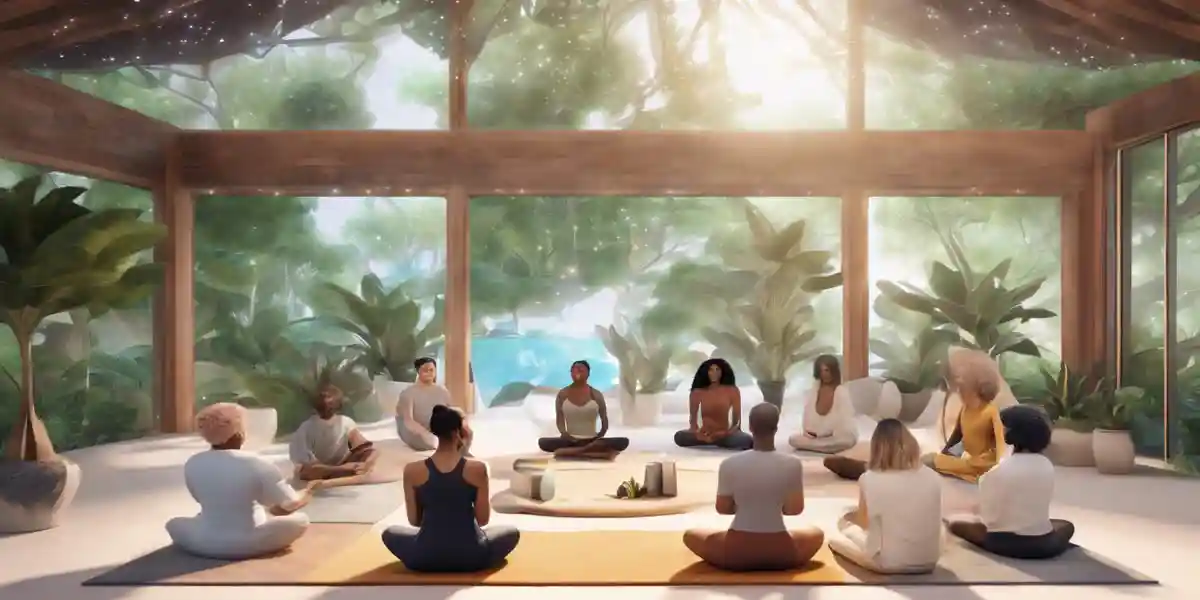
Decentralized wellness represents a paradigm shift in how we approach self-care and mental health, leveraging the unique properties of the Metaverse and blockchain technology. This section explores the innovative concept of virtual wellness retreats, designed to empower individuals on their journeys toward well-being.
Imagine stepping into a vibrant virtual world where you can escape the stress of daily life and immerse yourself in self-care practices tailored just for you. This is the concept of virtual wellness retreats in the Metaverse, an innovative approach that leverages the decentralized nature of Web3 to transform how we engage with our well-being.
In these retreats, participants can don their VR headsets and enter beautifully crafted environments—think serene beaches, lush forests, or tranquil mountain tops—designed to promote relaxation and mindfulness. Within these spaces, users can access guided meditation sessions, yoga classes, and holistic workshops led by wellness experts from around the globe, all in real-time and with an interactive twist.
What sets this apart from traditional experiences is the decentralized aspect. Participants can curate their own journeys, selecting from a variety of activities and even customizing the environments to suit their preferences. This level of personalization is a game changer—no longer are we bound by the constraints of physical locations or pre-set schedules. In a decentralized wellness ecosystem, the user takes precedence.
Thanks to blockchain technology, wellness practitioners can monetize their services directly, cutting out intermediaries and allowing for fair compensation. This model not only democratizes access to wellness resources but also fosters a community-driven ecosystem. Users can earn tokens for participation, which could be spent on future retreats or services, creating an ongoing cycle of engagement and support.
As highlighted in recent studies, mindfulness and self-reflection are often challenged by the distractions of modern life. Interactive technologies play a vital role in mediating personal experiences, facilitating positive change by enhancing self-awareness. For instance, immersive virtual environments (iVEs) designed to synchronize visuals and sounds with users' breathing patterns can enhance breath awareness, helping individuals reconnect with their bodies amidst daily distractions.
Moreover, techniques like LOOP Meditation integrate body movement and breath sensing within virtual environments, emphasizing the importance of physicality in meditation. This approach recognizes that traditional methods may overlook the benefits of movement, offering a more engaging experience for novice meditators.
Ultimately, the decentralized wellness model creates a global community where individuals can connect, share experiences, and support one another on their journeys toward health and happiness. In a world where mental health is paramount, virtual wellness retreats in the Metaverse offer a promising avenue for holistic self-care, bridging the gap between technology and well-being in an increasingly decentralized future.

In the ever-evolving landscape of wellness, the Metaverse offers an unprecedented platform for self-care, enabling individuals to explore holistic practices in immersive environments. By combining advanced technology with wellness strategies, the Metaverse redefines how we approach mental, emotional, and physical well-being.
Imagine stepping into a vibrant virtual world where you can escape the stress of daily life and immerse yourself in self-care practices tailored just for you. This is the essence of virtual wellness retreats in the Metaverse, an innovative approach that leverages the decentralized nature of Web3 to transform how we engage with our well-being.
In these retreats, participants don VR headsets and enter beautifully crafted environments—think serene beaches, lush forests, or tranquil mountain tops—designed to promote relaxation and mindfulness. The user experience is enhanced by interactive elements, allowing individuals to access guided meditation sessions, yoga classes, and holistic workshops led by wellness experts from around the globe, all in real-time.
What sets this apart from traditional experiences is the decentralized aspect. Participants can curate their own journeys, selecting from a variety of activities, and even customizing the environments to suit their preferences. For instance, a user might choose to practice yoga on a sunlit beach one day and engage in a breathwork session in a tranquil forest the next. This level of personalization not only enhances user engagement but also fosters a deeper connection to the self-care practices being explored.
Moreover, thanks to blockchain technology, wellness practitioners can monetize their services directly. This eliminates intermediaries and allows for fair compensation. Users can also earn tokens for participation, which could be spent on future retreats or services, thus fostering a community-driven ecosystem that incentivizes engagement and collaboration.
The integration of immersive technologies significantly enhances mindfulness practices. As highlighted in recent research, modern distractions often challenge mindfulness and self-reflection, crucial components of self-care. The Metaverse confronts this issue by employing interactive technologies that mediate personal experiences, facilitating positive change through enhanced self-awareness.
For example, a study introduced an immersive virtual environment (iVE) designed to enhance breath awareness by synchronizing visuals and sounds with users' breathing patterns. This approach not only fosters a deeper meditative state but also emphasizes the agency and control users have over their experiences—key factors that shape effective meditation.
Another promising development in this realm is LOOP Meditation, a VR-assisted technique that integrates movement and breath awareness. Recognizing that many VR and meditation applications overlook physical movement, LOOP Meditation is designed for novice meditators, helping them enhance their practices through an engaging and interactive medium. A pilot study comparing its effectiveness to traditional methods suggests that this innovative approach could positively impact mental health and contribute to the growing literature on immersive wellness practices.
As we continue to navigate the frontiers of self-care, the Metaverse stands out as a vibrant and dynamic space where technology and well-being intersect. By democratizing access to wellness resources and creating global communities, the Metaverse paves the way for individuals to embark on personalized journeys toward health and happiness.

Decentralization in self-care, particularly within the Metaverse, presents a dual-edged sword. On one hand, it offers unprecedented opportunities for personalization and accessibility; on the other, it introduces unique challenges that must be navigated thoughtfully.
One of the most significant advantages of decentralization in self-care is the democratization of wellness resources. In traditional settings, access to wellness activities—be it yoga, meditation, or holistic workshops—can be limited by geographical location, socioeconomic status, or even availability of expert facilitators. However, virtual wellness retreats in the Metaverse eliminate these barriers. Participants can connect with wellness practitioners from across the globe, gaining insights and experiences that would otherwise be out of reach. For example, a user in a bustling city might join a meditation session led by a renowned guru from a tranquil island, all from the comfort of their home.
Moreover, the personalized nature of these experiences enhances engagement and effectiveness. Users have the agency to curate their wellness journeys, selecting activities that resonate with their unique needs. This ability to customize environments—perhaps choosing a serene beach or a peaceful forest—can significantly bolster the relaxation and mindfulness benefits associated with self-care practices. A study referenced in recent research highlights how immersive virtual environments (iVEs) can enhance breath awareness by synchronizing audio-visual cues with users' breathing patterns. Such tailored experiences support self-reflection and mindfulness, providing users with a deeper connection to their practice.
Despite these benefits, challenges abound in a decentralized self-care landscape. One primary concern is the potential for information overload. In a vast web of content and interactions, users might struggle to discern which wellness practices are genuinely beneficial or credible. With countless voices in the digital space, the risk of misinformation increases, making it crucial for users to develop critical thinking skills when navigating their wellness journeys.
Additionally, while blockchain technology facilitates fair compensation for wellness practitioners by cutting out intermediaries, it also raises questions regarding data privacy and security. In a decentralized ecosystem, users must be aware of how their personal data is utilized and protected. As seen in the LOOP Meditation project, which emphasizes movement and breath awareness within virtual environments, the integration of physical movement with digital experiences can be empowering. However, it also necessitates robust data management practices to ensure users feel safe and secure in their interactions.
Finally, there is the challenge of maintaining community and connection in an increasingly digital world. While the Metaverse fosters a sense of global community, it also risks creating superficial interactions. Authentic relationships often develop through shared experiences, but can these be replicated in a virtual space? As participants engage in virtual retreats, how do we ensure that the connections formed are genuine and supportive? Addressing these questions is vital as we navigate the future of decentralized self-care.
The evolution of self-care through the Metaverse presents an exciting frontier for well-being, merging technology with holistic practices in a decentralized environment. As we delve into the future of wellness in Web3, it becomes clear that the integration of immersive experiences and community-driven platforms will reshape how we approach self-care.
Interactive technologies are at the forefront of this transformation. Research shows that immersive virtual environments (iVEs) can enhance mindfulness and self-reflection—key components of mental health. For instance, a study revealed that synchronized audio-visual cues can effectively promote breath awareness during meditation, helping individuals reconnect with their bodies and achieve a state of relaxation that is often elusive in today’s fast-paced world. Imagine participating in a virtual wellness retreat where the visuals and sounds are meticulously crafted to align with your breathing patterns. This level of personalization not only enhances the meditation experience but also fosters a deeper connection to oneself.
The decentralized nature of Web3 empowers users to take control of their wellness journeys. Participants can curate their experiences by selecting from a multitude of activities ranging from yoga classes to interactive workshops led by esteemed wellness practitioners from around the globe. This flexibility allows individuals to tailor their self-care routines according to their unique needs and preferences. Additionally, blockchain technology facilitates a direct compensation model for wellness experts, ensuring that they receive fair remuneration for their services while also creating a transparent ecosystem. Users can earn tokens for their participation, which can be reinvested into future wellness activities, thus encouraging an engaged and thriving community.
Among the innovative offerings in this digital wellness landscape is LOOP Meditation, a VR-assisted technique that emphasizes movement and breath awareness. Unlike traditional meditation practices that often neglect the importance of physical movement, LOOP integrates body movement and breath sensing within its virtual framework. This method has shown promising results in enhancing the overall meditation experience, particularly for beginners who may find conventional practices challenging. By introducing a more dynamic approach to mindfulness, such initiatives could significantly improve mental health outcomes and broaden the appeal of meditation.
As we navigate through the challenges of modern life, the ability to connect with others in a meaningful way is essential. Virtual wellness retreats foster a global community where individuals can share their experiences, support one another, and learn from diverse perspectives. This interconnectedness is particularly vital in an era where mental health struggles are increasingly prevalent. By leveraging the power of technology, we can create a supportive network that transcends geographical barriers, enabling individuals to embark on their wellness journeys together.
The Metaverse is not merely a digital playground; it represents a transformative space where self-care can flourish in a decentralized manner. By embracing these innovative technologies and community-driven approaches, we can pave the way for a healthier future, one in which well-being is accessible to all.

Imagine stepping into a vibrant virtual world where you can escape the stress of daily life and immerse yourself in self-care practices tailored just for you. This is the concept of virtual wellness retreats in the Metaverse, an innovative approach that leverages the decentralized nature of Web3 to transform how we engage with our well-being.
In these retreats, participants can don their VR headsets and enter beautifully crafted environments—think serene beaches, lush forests, or tranquil mountain tops—designed to promote relaxation and mindfulness. These virtual spaces are not just visually appealing; they are engineered with interactive features that enhance user experience. For instance, studies have shown that immersive environments can significantly improve mindfulness and self-reflection, which are often challenged by modern distractions. By using interactive technologies to mediate personal experiences, these retreats facilitate positive change, enhancing self-awareness through guided experiences and data representation.
What sets these virtual retreats apart from traditional wellness experiences is the degree of customization they offer. Participants can curate their own journeys, selecting from a variety of activities like guided meditation sessions, yoga classes, and holistic workshops led by wellness experts from around the globe. The decentralized aspect allows users to customize their environments, tailoring them to their preferences—whether they seek the calming sound of ocean waves or the invigorating ambiance of a sunlit forest. This level of personalization empowers individuals to take charge of their wellness journeys, contributing to a more engaging and effective self-care experience.
Thanks to blockchain technology, wellness practitioners can monetize their services directly. This cuts out intermediaries, ensuring fair compensation for their expertise and time. It allows a diverse range of wellness experts to participate in these retreats without the burdens of traditional business models. Furthermore, users can earn tokens for their participation, which can be spent on future retreats or services, fostering a community-driven ecosystem. This model not only democratizes access to wellness resources but also creates a global community where individuals can connect, share experiences, and support each other’s journeys toward health and happiness.
Incorporating advanced technologies, some virtual retreats have begun to explore innovative techniques like LOOP Meditation. This VR-assisted meditation practice emphasizes movement and breath awareness, which is crucial for novice meditators. By integrating body movement and breath sensing within virtual environments, LOOP Meditation enhances the user's experience. Studies suggest that such immersive virtual environments (iVEs) can effectively induce and sustain breath awareness, helping individuals reconnect with their bodies amidst daily distractions. The significance of agency and control in shaping these meditation experiences is paramount, offering insights for future mindfulness designs that prioritize breath awareness and personal engagement.
In a world where mental health is paramount, virtual wellness retreats in the Metaverse offer a promising avenue for holistic self-care. By bridging the gap between technology and well-being, these experiences provide individuals with the tools they need to navigate their mental health journeys effectively. With the ability to connect with others in a supportive environment, participants can share their experiences and inspire one another, creating a rich tapestry of support and empowerment in an increasingly decentralized future.
The journey into decentralized wellness through the Metaverse marks a pivotal turn in how we perceive and engage with self-care. Throughout this exploration, we have uncovered a transformative landscape where technology and holistic practices converge, offering unprecedented opportunities for personalization and accessibility.
We discussed how virtual wellness retreats in the Metaverse are revolutionizing self-care by providing immersive environments that promote relaxation and mindfulness. Participants can curate their own wellness journeys, selecting from a plethora of activities that cater to their unique needs, all while enjoying the benefits of community engagement made possible through decentralized platforms. Moreover, innovative approaches like LOOP Meditation exemplify how technology can enhance traditional practices, making self-care more engaging and effective.
However, with these advancements come challenges. The potential for information overload, data privacy concerns, and the risk of superficial connections in a digital realm must be navigated thoughtfully. As we embrace this new frontier, it is imperative that we foster critical thinking and cultivate meaningful relationships within these virtual spaces.
As we stand on the cusp of this exciting evolution in wellness, consider how you can engage with these new platforms. Will you explore a virtual retreat, share your experiences, or contribute to this burgeoning community? The future of self-care is not just about technology; it's about connection, support, and empowerment. Let's embrace the opportunities that the Metaverse offers and embark on this journey toward a healthier, more connected world together.
Get notified about new articles, coffee tips, and Web3 insights.
This site participates in affiliate programs and may earn a commission when a link is clicked and a purchase is made. The site is not responsible for any issues or troubles related to the products or services purchased through the use of this site.

DO&COFFEE loves coffee and technology, exploring the potential of NFTs and blockchain. Learn more →
DO&COFFEE loves coffee and technology, exploring the potential of NFTs and blockchain. Learn more →