coffee
2026/01/06

Have you ever scanned a QR code on a bag of coffee and wondered what it would take to make that story truly trustworthy—not just good marketing? Coffee roasters are increasingly experimenting with AI to predict better roasts, dial in recipes, and match flavor profiles to customer preferences. But in a cafe, “the model says so” isn’t enough. Recommendations only become usable when the underlying data—where the beans came from, what happened to them, and how quality was measured—can be shown, checked, and shared without falling apart in the real world.
This article goes inside the overlap between AI, cafe operations, and a culture of craft that demands proof. We’ll look at how QR-accessible transparency and tamper-resistant records help roasters “show their work,” making AI guidance easier to operationalize across busy teams and shifting conditions. We’ll also explore measurement stacks that already work in coffee—multi-signal verification like DNA fingerprinting, chemical analysis, and standardized sensory protocols (as in the Highvalue.Coffee model)—and why combining these signals creates stronger feedback loops than any single metric. The takeaway for Web3 builders shipping AI: coffee traceability research points to a practical mindset—pair rigorous measurement with transparent, tamper-resistant data sharing to create trust, improve quality monitoring, and make process-driven products actually stick with users.
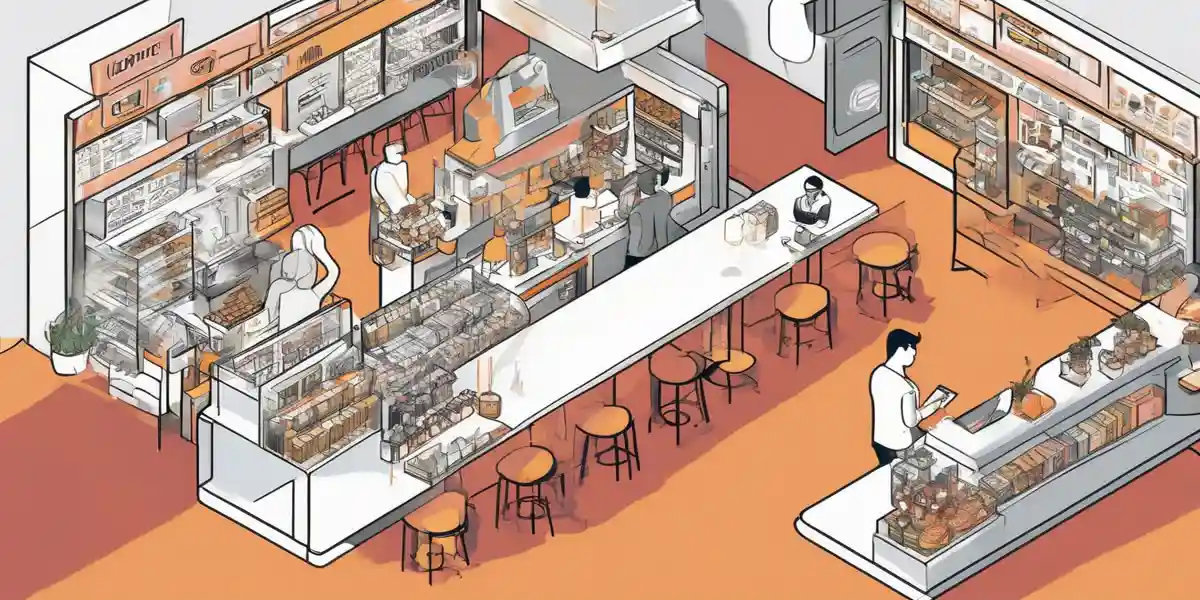
Cafes are practical places. Baristas and roasters will try new workflows—especially when a rush is coming and waste is expensive—but they need to know why a recommendation is being made and whether the underlying inputs are trustworthy. If an AI system suggests “grind finer,” “raise brew temp,” or “change the espresso recipe,” the team immediately asks: based on what coffee, what lot, what handling, and what quality signals?
This is where “show your work” traceability matters. The goal isn’t to drown staff or customers in data; it’s to make the minimum proof available on-demand, so the AI’s recommendation feels actionable rather than abstract. The paper titled “Highvalue.Coffee Project” and the Growing Importance of Coffee Traceability describes traceability as critically needed to support consumer trust, strengthen value-chain power, and monitor quality—and it proposes a model where key documents and analysis results can be accessed via QR codes while records are secured using a blockchain (a shared digital ledger designed to make tampering difficult).
In a cafe, the moment that matters is the moment of service: dialing in espresso, answering a customer question, deciding whether a bag on the shelf needs relabeling, or troubleshooting why a filter brew tastes off today. QR-accessible traceability converts background paperwork into frontline context.
In the model described in “Highvalue.Coffee Project” and the Growing Importance of Coffee Traceability, a QR code can provide access to shipping documents and analysis results (genetic identification via DNA fingerprinting, chemical analysis, and sensory evaluation using the SCA cupping protocol). That matters for operations because it gives the cafe a fast way to confirm: “Yes, this is the lot we think it is,” and “Here are the verified attributes and assessments tied to this lot.” When AI makes a suggestion, staff can quickly see the evidence trail that explains the “why.”
For Web3 builders, the product lesson is simple: transparency has to be retrievable at the point of action, not hidden in back-office dashboards. QR is the UX bridge between a physical product and digital proof.
Even when cafes collect lots of information, a common failure mode is spending energy debating whether the data is correct—especially when multiple parties touch the coffee (producer, exporter, importer, roaster, cafe). Distributed ledger approaches are useful here because they’re designed for shared, tamper-resistant recordkeeping across organizations.
The study Colombian Origin Coffee Supply Chain Traceability by a Blockchain Implementation explores a proof of concept using Hyperledger Fabric (an enterprise blockchain framework) to trace product origin and assess feasibility and implementation challenges. In plain terms: it shows how a blockchain-based traceability system can be implemented for supply chains where multiple participants need a consistent view of “what happened, when.”
That’s exactly what helps operationalize AI in cafes. If the AI is trained on or referencing historical records (roast batches, lots, shipping events, quality assessments), tamper-resistant logs reduce the risk that recommendations are built on missing or edited context. Less time spent debating the inputs means more time running the experiment: adjust one variable, observe, and decide.
A cafe dials in a coffee that tasted great last week, but today it’s hollow and sharp. An AI assistant might recommend changes, but the first operational question is: did the underlying coffee change?
With QR-accessible traceability (as proposed in “Highvalue.Coffee Project” and the Growing Importance of Coffee Traceability), staff can pull up the lot’s linked documentation and analysis results quickly. If the QR record indicates a different shipment document set or different analysis results tied to the coffee now in use, the team can treat this as a “new lot” situation—meaning the AI’s next recommendations can start from the right baseline instead of “assuming continuity.”
Customers increasingly ask questions like: “Is this really from the origin listed?” or “Why is this coffee priced higher?” Traceability isn’t just marketing—done well, it becomes an explanation layer for decisions.
The “Highvalue.Coffee Project” and the Growing Importance of Coffee Traceability model explicitly frames traceability as a way to ensure consumer trust and monitor quality, with QR access to documents and analysis outputs and blockchain-secured records. Now imagine an AI tool that helps staff choose which coffees to feature, or recommends brew parameters to highlight certain attributes. When the cafe can “show the work” (what the coffee is, what was measured or assessed, and what was recorded), the AI’s guidance becomes easier to communicate without hand-waving. The recommendation isn’t just “because the model said so”; it’s “because this verified lot has these recorded characteristics, so we’re brewing it this way.”
Many cafe problems are really coordination problems: the roaster has one set of notes, the cafe has another, and the importer has a third. AI struggles in that environment because it can’t reliably connect recommendations to a shared truth.
A blockchain-backed traceability approach, like the proof-of-concept explored in Colombian Origin Coffee Supply Chain Traceability by a Blockchain Implementation, is aimed at exactly this multi-party setting—where the point is consistent origin tracing across participants. Once the “what lot is this and what happened to it?” question is settled via shared records, AI becomes a layer on top that can recommend actions (training prompts for dialing in, risk flags for mismatches, or reminders to update recipes) without triggering constant disputes over whose spreadsheet is correct.
Web3 teams often talk about transparency as a property of the ledger. Cafes show that transparency only matters when it’s packaged as a simple workflow: scan → see the minimum proof → act. The combination described in “Highvalue.Coffee Project” and the Growing Importance of Coffee Traceability—QR-accessible results paired with blockchain-secured records—maps cleanly onto how real teams adopt AI: they trust and use recommendations faster when they can inspect the underlying chain of custody and quality evidence in seconds, right where decisions get made.

AI in coffee roasting sounds like a pure engineering problem: track temperature, airflow, time, and get a better roast. But roasters who actually improve week after week do something that looks less like “automation” and more like “community-driven iteration.” The cafe is where the roast gets audited in public—through baristas pulling shots all day, regulars returning (or not), and staff comparing notes on taste.
For Web3 builders, the parallel is straightforward: your protocol might be “on-chain,” but your product is still “in the cafe”—in Discord, on X, in wallet UX, in customer support, in how people actually use the thing. AI can help spot patterns, but it can’t replace a culture that captures feedback, debates it, and turns it into the next build.
In coffee, roasters don’t rely on vibes to judge quality. They standardize how they taste so feedback is comparable over time. The paper “Highvalue.Coffee Project” and the Growing Importance of Coffee Traceability describes using the SCA cupping protocol (a standardized sensory evaluation method) as part of a broader quality and traceability approach. That matters for AI experiments because sensory scores and tasting notes function like labeled training data: they turn “this is good” into “this has identifiable attributes we can track.”
In practice, this creates a repeatable loop:
Web3 teams often collect lots of quantitative signals (TVL, volume, retention) but fewer consistent qualitative labels (“why did users churn?” “what felt unsafe?” “what was confusing?”). The coffee lesson: don’t just harvest data—standardize how humans interpret outcomes, so AI tools can support decisions instead of producing fancy dashboards nobody trusts.
Cafe culture works when everyone argues about the same facts: which lot was used, how it was processed, when it shipped, and how it performed. That’s why traceability shows up as a recurring need in coffee research—not as a buzzword, but as a coordination tool across many parties.
According to “Highvalue.Coffee Project” and the Growing Importance of Coffee Traceability, robust traceability is critically needed to ensure consumer trust, enhance value chain power, and monitor quality. That framing is useful for Web3 builders because it’s the same core problem Web3 claims to solve: multiple stakeholders need shared truth they can act on.
The practical lesson isn’t “put everything on-chain.” It’s: create a system where your team can quickly answer, without debate:
When those basics are missing, AI recommendations become controversial (“the model is wrong”) because the underlying story of the system is unclear (“we don’t actually know what changed”).
Roasters rarely roll out a new process across everything at once. They pilot it on a few lots, learn where it breaks, then scale. That same discipline shows up in supply-chain tech research. The study Colombian Origin Coffee Supply Chain Traceability by a Blockchain Implementation is explicitly framed as an exploratory proof of concept using Hyperledger Fabric, with the goal of assessing feasibility and identifying implementation challenges while tracing product origin.
For Web3 builders shipping AI features, this is a blueprint for operational humility:
In coffee, this kind of rollout works because the cafe already has a habit of routine check-ins: daily dial-ins, weekly cuppings, constant micro-corrections. That culture is what makes experimentation safe. In Web3, teams that skip culture try to compensate with code and analytics—then wonder why “the model” didn’t change behavior.
Baristas don’t just follow recipes—they diagnose. They notice a shot running fast, adjust the grind, and taste again. AI tools in cafes (and AI tools in Web3 products) succeed when teams treat them the same way: not as an oracle, but as a partner in a tight loop.
A simple operating stance to borrow from cafe culture:
This is the quiet secret behind “AI experiments” that actually stick: the tech is only as good as the daily habits around it.

Great roasters don’t bet everything on a single readout. A roast curve might look perfect, but the cup can still taste flat. A tasting note might sound convincing, but the beans might not even be what the label claims. That’s why the strongest coffee quality systems resemble a measurement stack: multiple independent signals that cross-check each other.
That same mindset is the product lesson for Web3 builders shipping AI. If your AI model is making decisions that affect pricing, rewards, reputation, or real-world sourcing, you need more than one metric (or one dashboard) to know whether it’s working. Robust AI products are built on multi-signal verification: different types of evidence that reduce blind spots and make failures easier to diagnose.
According to the paper “Highvalue.Coffee Project” and the Growing Importance of Coffee Traceability, coffee businesses have a critical need for robust traceability to support consumer trust, strengthen value-chain power, and monitor quality—and it proposes an approach that combines genetic, chemical, and sensory results into one service model.
Start with the most basic question: Is this coffee actually what we think it is? The Highvalue.Coffee model uses DNA fingerprinting (a way to identify biological material by its genetic markers) to verify coffee variety. In plain terms: it’s an identity check for beans.
Web3 + AI parallel: In crypto, teams often assume inputs are honest—then get wrecked by “garbage in, garbage out.” DNA-style verification is the equivalent of an anti-spoofing layer for your AI system. If your model depends on user-submitted claims (origin, quality, inventory, emissions, labor practices), you need a way to verify identity and provenance beyond self-reporting. Sometimes that’s cryptographic attestations; sometimes it’s physical-world validation; often it’s a combination.
Product lesson: Separate your measurement stack into layers—identity (is it real?), composition (what’s inside?), and experience (does it meet expectations?). If you skip identity, every downstream metric becomes easier to manipulate.
Once identity is plausible, the next question is: What are the beans made of in measurable terms? The Highvalue.Coffee paper describes incorporating chemical analyses of key compounds into the traceability/quality stack. This adds an objective layer that doesn’t depend on opinions or marketing language.
There’s also a practical scaling angle: the study Near-infrared reflectance spectroscopy accurately predicted isotope and elemental compositions for origin traceability of coffee explores near-infrared reflectance spectroscopy (NIR)—a rapid scanning method—as a way to predict isotope and elemental compositions for origin traceability. For builders, the important takeaway isn’t the lab chemistry itself; it’s the pattern: add fast, repeatable instrumentation so you can measure more often and catch drift earlier.
Web3 + AI parallel: This is like moving from “community sentiment” to hard telemetry. If your AI ranks suppliers, routes orders, or flags anomalies, you want signals that are difficult to fake and easy to compare over time. Think: sensor data, audit artifacts, statistical anomaly scores, consistency checks across independent data sources.
Product lesson: Build at least one measurement channel that is (1) repeatable, (2) comparatively objective, and (3) scalable enough to run frequently. AI systems degrade quietly; frequent telemetry is how you notice before users do.
Even with DNA and chemistry, coffee still has to taste good. The Highvalue.Coffee model includes standardized sensory evaluation using the SCA cupping protocol (a structured, consistent way for trained tasters to evaluate coffee). This matters because it turns “vibes” into a repeatable method—still human, but less arbitrary.
Web3 + AI parallel: This maps cleanly to AI evaluation. You can’t rely only on automated metrics (accuracy, loss, engagement). You also need a standard human evaluation harness: consistent prompts, rubrics, and review workflows that make subjective judgment more reliable. In production AI—especially user-facing AI—some of the most important failures are experiential (confusing, misleading, or inconsistent), and humans catch them first.
Product lesson: Don’t treat human review as an afterthought. Operationalize it like coffee cupping: a repeatable protocol, clear scoring rules, and a cadence. If you’re shipping AI into a market mechanism (tokens, points, on-chain reputation), human eval helps prevent “technically correct, practically harmful” outcomes.
Roasters don’t collect measurements to feel sophisticated—they collect them to make better decisions next batch. The Highvalue.Coffee approach is valuable to Web3 builders because it shows what a complete loop looks like:
This is the same discipline that separates fragile AI products from reliable ones: not “better prompts,” but better measurement—built as a stack, not a single score.
Coffee traceability often involves multiple parties—farmers, exporters, importers, roasters—who may not share a single database. The paper Colombian Origin Coffee Supply Chain Traceability by a Blockchain Implementation describes an exploratory proof of concept using Hyperledger Fabric to assess feasibility, identify implementation challenges, and demonstrate product origin tracing with distributed ledger technology.
Web3 + AI parallel: If you want multi-signal verification to actually work across organizations, you need shared coordination. Blockchain (a digital ledger system) can help multiple parties record and reference the same set of claims and checks. But the key product point is this: the ledger doesn’t replace measurement—it only helps coordinate and preserve the outputs of measurement.
In coffee, the “truth” comes from DNA, chemistry, and sensory protocols; in AI products, “truth” comes from well-designed evaluation and telemetry. The ledger is only useful once your measurement stack is real.
The “perfect roast” isn’t just a romantic idea—it’s a systems problem. And that’s exactly why coffee’s most practical experiments with AI-friendly workflows have so much to teach Web3 builders. When cafes and roasters can show their work—through QR-accessible transparency and tamper-resistant records—recommendations stop being abstract dashboards and start becoming something staff can trust, explain, and act on in the moment. Traceability doesn’t replace craft; it makes craft legible enough for tools (including AI) to reliably assist it.
What stands out across the measurement stacks described here is that the strongest learning loops don’t depend on a single “truth signal.” Highvalue.Coffee’s model points toward multi-signal verification—DNA fingerprinting, chemical analysis, and standardized sensory protocols—as a blueprint for feedback that’s hard to game and easier to reconcile when signals disagree. Pair that with practical instrumentation approaches (like NIR and structured data capture) and you get a product lesson Web3 teams often learn the hard way: “better models” matter less than better inputs, better provenance, and better operational pathways for turning insights into action.
It’s also worth naming what the evidence here doesn’t fully cover. The sections emphasize traceability and measurement systems more than day-to-day “AI inside roasting operations” or the softer human layer of cafe culture—so claims about AI experiments succeeding because of cultural dynamics should be framed as a hypothesis, not a settled conclusion. And even when blockchain feasibility is demonstrated, real-world adoption runs into practical hurdles: what data to store, how to architect it, and who maintains it—all tradeoffs that can slow teams down if they treat traceability as a slogan rather than a design constraint.
Key takeaways for Web3 builders shipping AI:
1) Make trust usable: QR-accessible transparency plus tamper-resistant records turns provenance into something customers and frontline staff can actually use—making AI recommendations easier to operationalize, not just admire.
2) Build multi-signal feedback loops: combine independent checks (DNA, chemical, sensory) so your system can learn and verify, not merely predict.
3) Ship the measurement stack, not just the model: the winning product is the workflow—capture, standards, provenance, and decision points—because that’s what turns insight into repeatable quality.
If you’re building at the intersection of AI and Web3, take a page from the best coffee operations: start by designing how your product will “taste” on the floor—how people will verify it, explain it, and correct it—then make the underlying records and measurement system worthy of that trust. The next step is simple: pick one place where your users currently rely on guesswork, and prototype a “show your work” loop—traceable inputs, multi-signal verification, and a clear action the user can take. That’s how AI meets the perfect roast—and how Web3 products earn a place in real-world culture, not just on-chain.
Get notified about new articles, coffee tips, and Web3 insights.
This site participates in affiliate programs and may earn a commission when a link is clicked and a purchase is made. The site is not responsible for any issues or troubles related to the products or services purchased through the use of this site.

DO&COFFEE loves coffee and technology, exploring the potential of NFTs and blockchain. Learn more →
DO&COFFEE loves coffee and technology, exploring the potential of NFTs and blockchain. Learn more →