crypto
2026/01/16

This article contains affiliate links. We may earn a small commission at no extra cost to you. Learn more
Ever picked a coffee because the bag told you exactly where it came from, who processed it, and what to expect in the cup—then wondered why a “token” you’re considering buying or building on comes with nothing but a ticker symbol and hype? For tech professionals, crypto and DeFi can feel like walking into a specialty café where half the menu has no origin label: you might still get caffeine, but you’re gambling on what’s actually in the brew.
This guide uses a specialty brews menu as a translation layer for DeFi and crypto. You’ll learn how to “taste” a token’s provenance before treating it like single-origin quality versus a generic house blend—by checking the issuer, supply mechanics, distribution, and on-chain history. We’ll also lay out menu-style callouts for the minimum “origin card” data to require: what was made, by whom, where it lives on-chain, and what assumptions (and risks) you’re inheriting when you interact with it.
The thesis is simple: the same reason detailed coffee origin information can signal distinctiveness and value is why provenance matters in crypto. Just as specialty coffee can hinge on specific, detailed landscape factors—not merely broad regions—tokens and DeFi systems deserve scrutiny beyond their category names. Think of this post as a way to read the “origin label” of crypto: a practical approach to traceability, transparency, and the inevitable tradeoffs of designing for trust (and its limits).
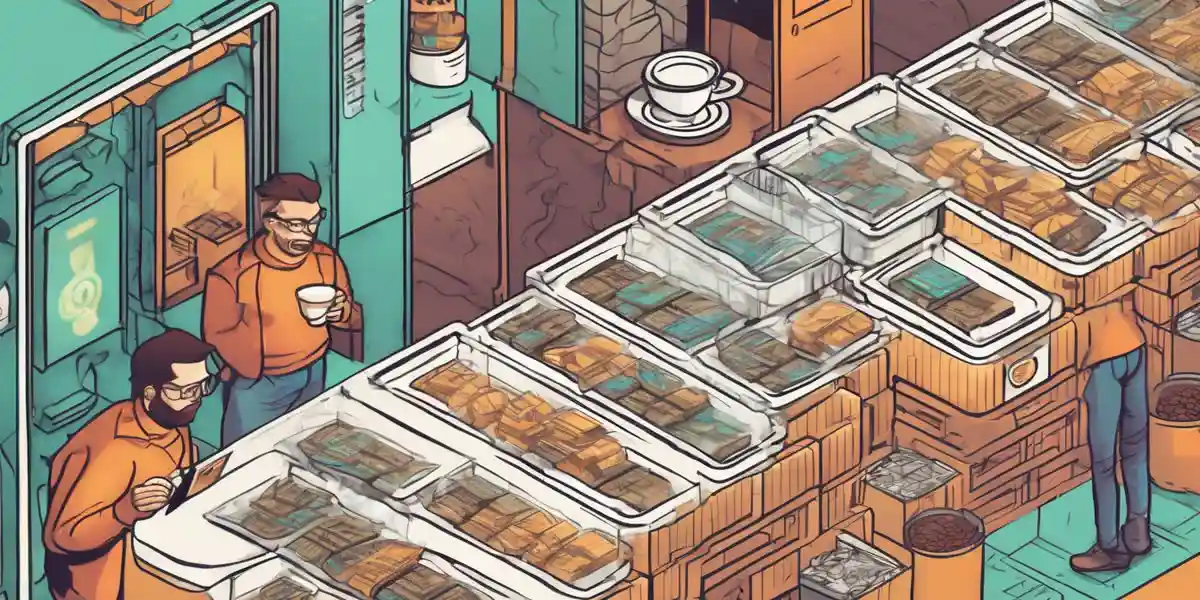
In a specialty café, “single-origin” isn’t just a vibe—it’s a promise that the coffee’s identity (and price) comes from traceable, specific origins and processing details. Research on coffee traceability highlights that the value of “origin” comes from fine-grained detail, not broad labels. According to the study “Coffee Landscapes: Specialty Coffee, Terroir, and Traceability in Costa Rica”, producers in Tarrazú use traceability systems that map specific landscape features to coffee lots; that detail is treated as integral to creating distinctive flavors that command high prices.
Crypto has the same problem in a different wrapper: lots of tokens claim uniqueness (“the next blue-chip,” “community-owned,” “fully decentralized”). Your job—before you treat a token like a “single-origin microlot” vs a “house blend”—is to “taste” its provenance. In crypto translation, that means reading what the blockchain (a digital ledger system) can show you about the token’s origin story and how it behaves over time.
Think of this like a cupping form, but for tokens. You’re not looking for perfection—you’re looking for clear, consistent signals that the token is what it says it is.
1) Issuer (who roasted it?)
In coffee, you ask: Which farm? Which mill? Which roaster? In crypto, the analog is: who created the token contract, who controls upgrades/admin keys (if any), and who can change critical parameters. “Issuer” isn’t always a company; it could be a multisig wallet (a wallet that requires multiple approvals) or a governance process. But you want to know whether control is concentrated or truly shared, because that changes your risk profile.
2) Supply mechanics (how is it brewed?)
Supply mechanics are the rules for how tokens are created, destroyed, or released. This includes:
These are the “ingredients list” and “brew recipe” that determine whether the token behaves like a scarce single-origin bean or a mass blend that can be rebalanced at any time.
3) Distribution (who got the first cups?)
Distribution is where many tokens quietly reveal they’re a “generic blend.” You’re checking how much supply went to insiders (team, early investors, treasury), how much was sold publicly, and what unlocks are still pending. Even if the token is technically decentralized, concentrated ownership can make price action and governance behave like a centrally controlled product.
4) On-chain history (how has it actually tasted in the wild?)
On-chain history is your “past brew logs.” Because blockchains record transfers, you can inspect patterns:
This is where “marketing notes” meet reality: you can compare what the project claimed with what actually happened on-chain.
Blockchains are excellent at preserving records, but they can’t magically validate everything that matters. The coffee world runs into the same issue: better tracking helps, but it doesn’t automatically make every input trustworthy.
A concrete example comes from the paper “Colombian Origin Coffee Supply Chain Traceability by a Blockchain Implementation”, which describes a proof-of-concept implementation of blockchain traceability (on Hyperledger Fabric) and emphasizes both feasibility and challenges. The lesson for crypto readers: even if you can follow a trail perfectly, you still need to know whether the trail began with honest data and sensible controls.
Crypto translation: on-chain data is strong evidence of on-chain events (mints, transfers, contract upgrades). But claims about off-chain facts—like “real-world revenue,” “audited reserves,” or “this wallet belongs to the foundation”—may still rely on trust, audits, and incentives.
Mini-case 1: The “single-origin” token that’s actually a private-label blend (issuer risk)
A token markets itself as “community-owned,” but the contract is upgradeable and controlled by a small multisig. On-chain history shows parameter changes that directly affect holders (fees, transfer restrictions, emissions). That’s like a café claiming “farm-direct,” but the roaster can quietly swap beans whenever pricing changes.
What you “taste”: centralized control masked by branding. Treat it like a house blend—fine for casual use, risky as a long-term collectible.
Mini-case 2: The “limited microlot” with a hidden refill valve (supply mechanics risk)
A token advertises scarcity, but the mint function is controlled by an admin or governance process that can be captured (taken over) by a small group. Even without abuse, the mere presence of a “refill valve” changes the token’s nature: scarcity is conditional, not absolute.
What you “taste”: scarcity-by-policy, not scarcity-by-design. That can still be valid—just label it correctly in your mental menu.
Mini-case 3: The “transparent origin” that needs more than a QR code (distribution + history)
In coffee, traceability systems can expose more than a name and region. According to “Highvalue.Coffee Project” and the Growing Importance of Coffee Traceability, a service model can combine genetic analysis (DNA fingerprinting), chemical tests (for example moisture and caffeine), and sensory analysis (SCA cupping) and make results accessible via QR-code platforms to support trust and quality monitoring.
Crypto has an analog: explorers and dashboards are the QR codes—but a token’s real “quality signals” often require multiple checks, not just one link. You might scan a token on a block explorer and see the contract address (nice), but you still need to cross-check distribution, unlock schedules, and behavior around major events (listings, airdrops, incentives).
What you “taste”: transparency is a tool, not a verdict. A QR code can show you the record; it can’t guarantee the record represents what you think it does.
If you’re deciding whether a token deserves “single-origin attention” (deep research, long-term conviction) or “house-blend handling” (small size, high skepticism), do this quick pass:
This is the crypto equivalent of reading the bag label, scanning the lot QR code, and asking: “Is this actually a distinct microlot with a traceable story—or is it a solid house blend with a nice description?”
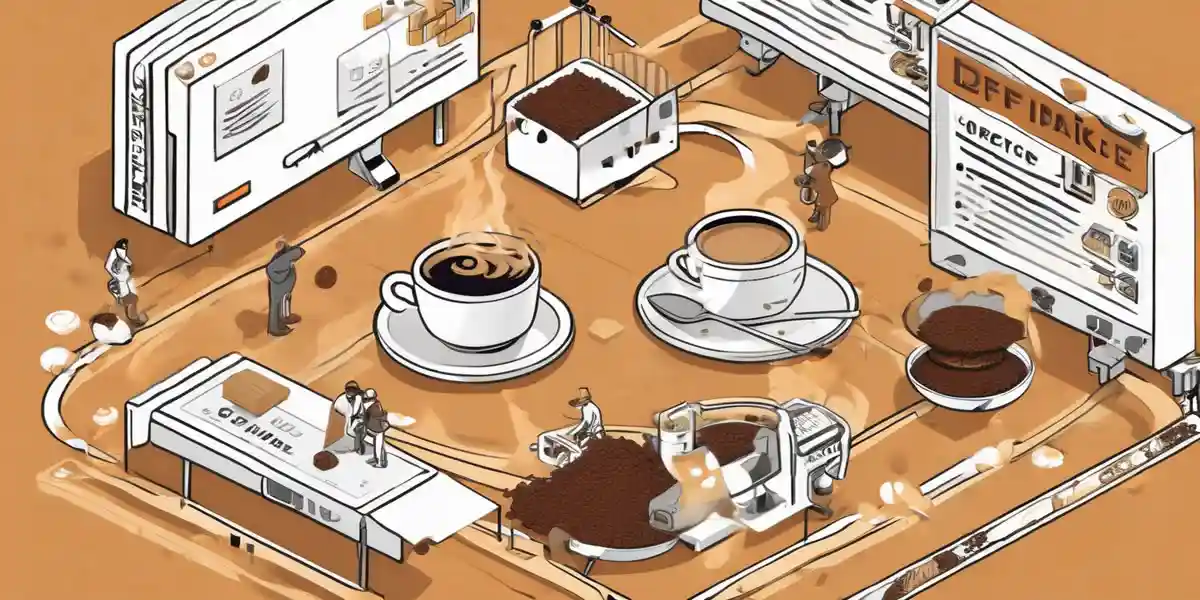
In specialty coffee, two bags can both say “Costa Rica,” yet taste wildly different depending on processing and what’s actually known about the lot. DeFi works the same way: two tokens can both call themselves “DeFi,” “yield,” or “community-owned,” but what determines your real outcome is the mechanism—the specific smart-contract rules that move funds, set prices, and distribute rewards.
In this menu framing, “processing method” means: how the protocol turns inputs into outputs. For a tech professional, it’s the difference between reading a label (“high APY,” “blue-chip collateral”) and reading the recipe (“here’s the contract logic that creates that APY”).
Specialty coffee’s premium isn’t created by vague origin claims alone; it comes from connecting the product to granular, verifiable context. According to the study “Coffee Landscapes: Specialty Coffee, Terroir, and Traceability in Costa Rica”, Tarrazú farmers use traceability systems that map specific landscape features to coffee lots, and that mapping supports distinctive flavors that can command higher prices—traceability is treated as integral to terroir-based value creation.
DeFi has an equivalent: if a protocol can’t clearly “map” where returns come from (fees, inflation, liquidation penalties, MEV, rehypothecation, etc.), you don’t really have a product description—you have a slogan. The “fine-grained details” in DeFi are the mechanics: what actions generate cashflow, what assumptions make it safe, and what scenarios break it.
Below are three common DeFi primitives described like brew methods—each has a distinct “taste profile” (expected behavior) and known ways it can go wrong.
1) Automated Market Maker (AMM) swaps = “house drip”
AMMs are on-chain exchange pools where prices are set by a formula rather than an order book. You “pour in” one asset and “pour out” another, paying a fee and accepting the pool’s current price curve.
2) Lending/borrowing = “espresso shot”
Lending protocols let you deposit assets to earn interest, or borrow against collateral. The “intensity” comes from leverage: you can amplify outcomes quickly, for better or worse.
3) Yield farming / incentives = “nitro cold brew”
Yield farms often add extra token rewards on top of fees/interest. The “smoothness” can be misleading: incentives can mask risk, and returns may be mostly subsidized.
Specialty coffee traceability doesn’t stop at storytelling; it can include objective tests and expose them to customers. The paper “‘Highvalue.Coffee Project’ and the Growing Importance of Coffee Traceability” describes a service model that integrates DNA fingerprinting, chemical tests (examples listed include moisture and caffeine), and SCA cupping sensory analysis, then makes results available through QR-code-accessible platforms to support consumer trust and quality monitoring.
DeFi’s version of “scan the QR code” is: don’t accept a token’s marketing page as the tasting note. Ask for artifacts that can be inspected:
This is also where tech intuition helps: blockchains improve auditability and data sharing, but they don’t guarantee off-chain inputs are correct. A clean on-chain “receipt” can still reflect a flawed oracle, compromised admin key, or misleading incentive design—just like a QR code doesn’t automatically mean the underlying test process was sound.
Example A: Choosing between two “yield” offers
Both advertise “stable” returns. One is mostly generated from borrower interest (espresso: intense but legible mechanics), the other is mostly token rewards (nitro: smooth but possibly subsidized). Using the coffee-traceability lens, the question is: can the protocol map returns to a real source the way specialty coffee maps value to fine-grained origin details? If it can’t, treat the APY like a flavor note without a cupping sheet.
Example B: Trading on a low-liquidity pool
You’re swapping a token in a thin AMM pool. The “menu price” (spot price) may look good, but the actual cost shows up as slippage—similar to ordering a rare micro-lot but discovering the grinder is dialed wrong and your cup comes out inconsistent. The mechanism (pool depth + pricing curve + MEV exposure) is the real recipe.
Example C: Borrowing against collateral during volatility
You deposit collateral and borrow another asset. Everything seems fine—until price moves fast and you get liquidated. That’s not “bad luck”; it’s the espresso nature of the product: concentrated risk. The practical step is to treat liquidation thresholds and oracle design as non-negotiable “brew parameters,” not optional fine print.
DeFi and crypto can feel like walking up to a specialty coffee bar where everything has a clever name and a lot of hidden complexity. The core idea of this guide is simple: treat tokens the way a good café treats beans—don’t judge the label, read the “origin story.” Before you treat any token like a single-origin you can trust (or a generic house blend you’ll only use for basic purposes), learn to “taste” its provenance: who issued it, how supply is created or constrained, how it was distributed, and what its on-chain history reveals about how it’s actually been used.
For tech professionals, that translates into a practical “menu callout”: require a minimum origin card before you integrate, invest, or build. At a bare minimum, you should be able to answer: what was made (token type and purpose), by whom (issuer and governance), where it lives on-chain (contracts, addresses, and networks), and what assumptions you’re inheriting (custody model, upgradeability, admin keys, oracle dependencies, and any off-chain trust points). If you can’t get those details clearly, you’re not choosing a brew—you’re taking a mystery cup.
It’s also worth holding the analogy with the right skepticism. Traceability systems can help document and secure data trails, but nothing in the provided summaries proves that blockchain guarantees truth at the point of entry—if upstream inputs are wrong, immutability can preserve the wrong thing perfectly. And while the coffee supply-chain framing is a helpful mental model for evaluating crypto “provenance,” the summaries themselves don’t provide direct evidence about DeFi/crypto user outcomes, risks, or performance. So use the mapping as a decision aid, not as empirical proof that one ecosystem behaves like the other.
Key takeaways:
1) Don’t “sip and guess”—inspect a token’s issuer, supply mechanics, distribution, and on-chain history before assigning it a trust tier.
2) Demand an “origin card” as your baseline due diligence: what it is, who controls it, where it runs, and what trust assumptions you’re accepting.
3) Separate traceability from truth: on-chain records can be auditable, but they don’t automatically validate the real-world accuracy of what was recorded.
Next step: the next time a token or DeFi protocol shows up on your radar, approach it like a barista with standards—ask for the origin card, read the on-chain “tasting notes,” and decide whether you’re ordering a dependable house blend token for a simple use case or stepping up to high-octane DeFi with eyes wide open.

Get notified about new articles, coffee tips, and Web3 insights.
This site participates in affiliate programs and may earn a commission when a link is clicked and a purchase is made. The site is not responsible for any issues or troubles related to the products or services purchased through the use of this site.

DO&COFFEE loves coffee and technology, exploring the potential of NFTs and blockchain. Learn more →
DO&COFFEE loves coffee and technology, exploring the potential of NFTs and blockchain. Learn more →