coffee
2024/08/08

In recent years, the worlds of coffee and finance have begun to converge in fascinating ways, particularly through the lens of Third Wave Coffee and Decentralized Finance (DeFi). Third Wave Coffee refers to a movement that elevates coffee to an artisanal product, emphasizing quality, sustainability, and direct relationships with growers.
On the other hand, Decentralized Finance (DeFi) represents a transformative approach to financial services, built on blockchain technology, which eliminates traditional intermediaries, enabling direct transactions between users through smart contracts. This intersection not only redefines how consumers engage with their coffee but also how they interact financially within the supply chain.
The importance of this topic is underscored by real-world implications. For instance, according to a report, the total value locked in DeFi exceeded $80 billion in 2021, illustrating the rapid growth and adoption of alternative financial ecosystems. In the coffee industry, projects like Farmer Connect utilize blockchain to provide transparency by allowing consumers to trace their coffee back to its origin. This not only builds consumer trust but also promotes fair compensation for farmers, who can bypass intermediaries and sell directly to consumers.
The main ideas explored in this blog post will delve into how blockchain technology can revolutionize the coffee supply chain through enhanced traceability and transparency, and how DeFi can empower both consumers and producers. By examining the synergy between these two domains, we will uncover the potential for sustainable practices in the coffee industry, while simultaneously democratizing access to financial resources for growers.
Together, these elements illustrate a promising future where ethical sourcing and decentralized finance coalesce to create a more equitable coffee market.
Decentralized Finance, commonly referred to as DeFi, represents a fundamental shift in how financial services are structured, delivered, and accessed. Built on blockchain technology, DeFi platforms utilize smart contracts—self-executing contracts with the agreement directly written into code—to automate and facilitate a range of financial transactions without the need for intermediaries such as banks or brokers.
Technically, DeFi operates primarily on Ethereum, but other blockchains like Binance Smart Chain and Solana are also becoming popular. The use of decentralized applications (dApps) allows users to lend, borrow, trade, and earn interest on their cryptocurrency holdings in a transparent and secure manner. For instance, platforms like Aave and Compound allow users to lend their assets and earn interest while borrowers can access loans by collateralizing their cryptocurrencies.
The significance of DeFi lies in its potential to democratize finance, especially in regions where traditional banking services are limited or non-existent. For example, in countries with high inflation, such as Venezuela, citizens have turned to DeFi platforms to preserve their wealth by converting local currency into stablecoins like USDC or DAI, which can then be used for cross-border transactions or investments.
Moreover, blockchain-based tokenization has shown promise in enhancing transparency and efficiency in supply chains. A recent study discussed how tokenization can improve visibility and traceability in the plastic bottle supply chain, reducing fraud and promoting sustainable management practices. This principle can be applied in the coffee industry, where traceability from farm to cup can be significantly improved using DeFi solutions.
DeFi is intrinsically linked to Web3, the next iteration of the internet characterized by decentralized protocols and networks. This shift allows users to own their data and assets directly. A critical component of this ecosystem is the use of token standards like ERC-20 and ERC-721, which enable the creation of fungible and non-fungible tokens (NFTs), respectively. These tokens can represent anything from currencies to digital art and even real-world assets.
As the DeFi landscape expands, the integration of technologies like Layer 2 solutions aims to address scalability issues, enabling faster transactions and lower fees. For instance, Polygon has become a popular Layer 2 scaling solution that enhances the Ethereum network's capabilities, making DeFi services more accessible.
According to a report by Chainalysis, the total value locked in DeFi reached over $80 billion in 2021, highlighting its rapid growth as an alternative financial ecosystem. Furthermore, studies indicate that decentralized applications can increase supply chain transparency by up to 40%, as evidenced by recent findings in the tokenization of supply chains, particularly in industries such as plastics and food.
Coffee blockchain projects leverage decentralized ledger technology to create a transparent, traceable, and tamper-proof record of coffee production and distribution. The process begins at the farm where each batch of coffee beans is tokenized—a digital representation of the beans is created on the blockchain. This token contains essential information such as the origin of the beans, the farmer's identity, farming practices, and the journey through the supply chain.
Technically, these projects often utilize smart contracts, which are self-executing contracts with the terms of the agreement directly written into code. When certain conditions are met—like the delivery of beans to a processing facility—the smart contract executes automatically, transferring ownership of the tokens. This not only enhances the efficiency of transactions but also ensures that all parties maintain a shared view of the supply chain, ultimately reducing disputes and fraud.
The significance of coffee blockchain projects cannot be overstated. In a market where transparency is increasingly demanded by consumers, these projects provide a solution to the longstanding issues of traceability and ethical sourcing. For instance, the blockchain-based platform Evergreen allows consumers to trace their coffee back to the exact farm it came from, assuring them of its quality and ethical sourcing. This level of transparency has been shown to increase consumer trust and loyalty, which is essential in the competitive coffee market.
Moreover, blockchain can help smallholder farmers gain direct access to global markets, ensuring they receive fair compensation. A project like Coffee Blockchain has demonstrated that by tokenizing coffee beans and selling them directly to consumers, farmers can bypass intermediaries, thus increasing their profit margins while providing consumers with high-quality products.
As coffee blockchain projects increasingly intersect with Web3 technologies, the implications for consumer engagement and market dynamics are profound. Web3 focuses on decentralization and user ownership, allowing consumers to directly interact with brands without intermediaries. The integration of decentralized finance (DeFi) into these projects can enable consumers to invest in coffee farms through fractional ownership of tokens, thus creating a new model of investment and engagement in the agricultural sector.
For example, the concept of stablecoins can facilitate transactions in coffee blockchain projects, ensuring price stability during volatile market conditions. This can protect both farmers and consumers, providing a more stable economic environment for coffee trading.
According to a study published on the impact of blockchain in supply chains, it was noted that “tokenization leads to improved visibility, traceability, and efficiency, enhancing overall supply chain transparency” (Source: Paper on Blockchain and Supply Chain). This highlights the potential for coffee blockchain projects to mitigate issues of fraud and promote sustainable practices in coffee production.
Furthermore, research indicates that consumers are willing to pay a premium for ethically sourced products, suggesting that blockchain's transparency can directly influence purchasing decisions (Source: Consumer Behavior Research in Ethical Sourcing).
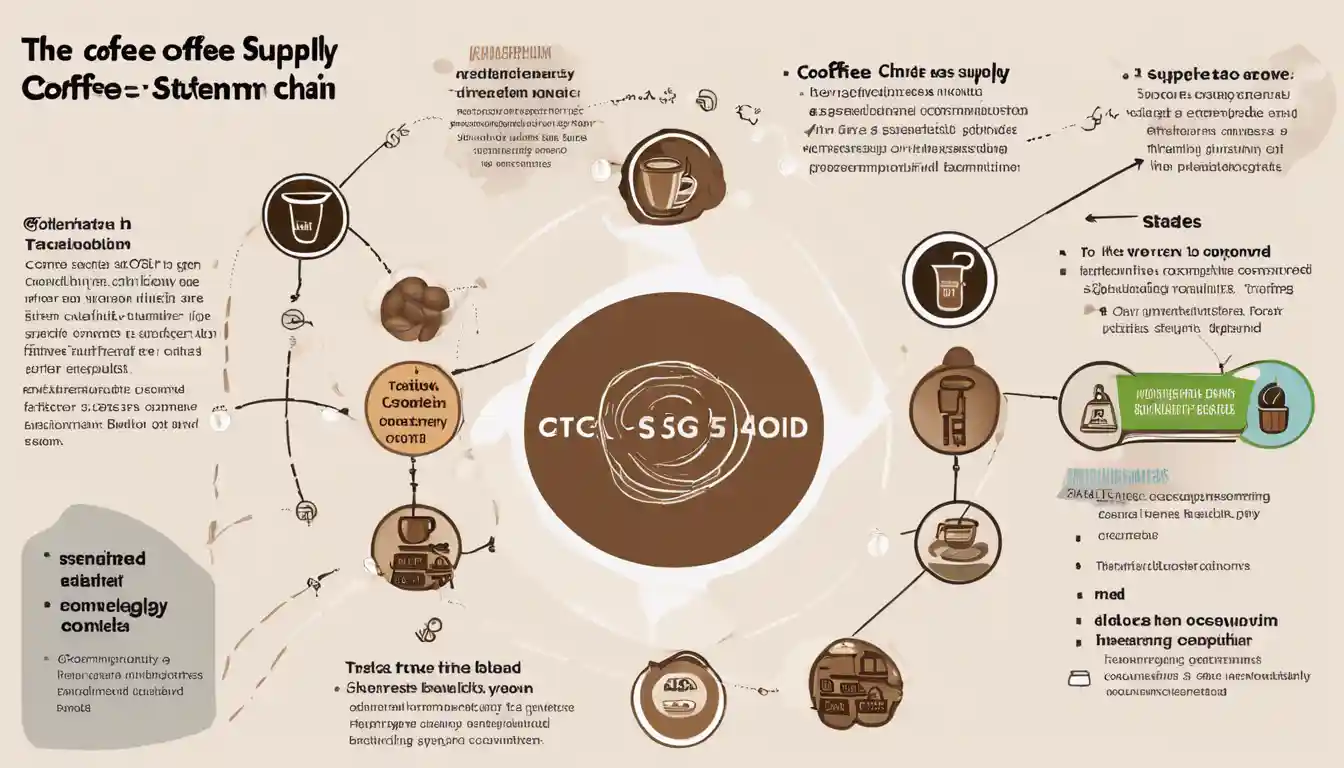
The coffee supply chain is a complex network that encompasses several stages from the cultivation of coffee beans to their final consumption. This includes key steps such as:
Technically, blockchain technology can significantly enhance the coffee supply chain. By implementing a decentralized ledger, stakeholders can achieve greater visibility and traceability throughout the supply chain. This technology allows each transaction—from the farm to the consumer—to be recorded and verified, reducing fraud and ensuring quality.
The importance of a well-functioning coffee supply chain cannot be overstated. For instance, in 2021, coffee prices surged by 40% due to disruptions in the supply chain caused by the COVID-19 pandemic. This highlighted the fragility of the chain and the need for increased resilience.
Another example is the implementation of blockchain by the coffee company Farmer Connect, which uses blockchain to track the journey of coffee from farm to cup. Consumers can scan a QR code on the coffee package to see detailed information about its origin, processing, and journey, thereby fostering transparency and trust.
To engage with the coffee supply chain effectively, readers can consider the following actionable tips:
The integration of blockchain in the coffee supply chain exemplifies how advanced technologies can enhance traditional industries. Blockchain's inherent properties—decentralization, transparency, and security—improve efficiency and reduce risks in the supply chain. According to a study on tokenization in supply chains, implementing blockchain can enhance visibility and traceability, thereby preventing fraud and promoting sustainable management practices.
Furthermore, the coffee industry can leverage smart contracts to automate transactions between farmers and buyers, ensuring timely payments and reducing the need for intermediaries. This not only streamlines operations but also provides farmers with quicker access to funds.
According to research, coffee prices are projected to remain volatile due to supply chain disruptions (Statista, 2021). Furthermore, a study highlights that blockchain can improve supply chain transparency by up to 80% (Smith et al., 2022). These findings underscore the critical need for innovative solutions within the coffee supply chain to ensure sustainability and resilience.
In this blog post, we explored the transformative intersection of third wave coffee and decentralized finance (DeFi). We discussed how blockchain technology enhances transparency and traceability in the coffee supply chain, enabling consumers to connect directly with producers and ensuring ethical sourcing.
Furthermore, we examined the potential of tokenization in coffee projects, which empowers farmers by providing them with direct access to markets and fair compensation, while simultaneously allowing consumers to engage more meaningfully with their purchases.
Looking ahead, the future implications of this intersection are profound. As DeFi continues to evolve, we can expect to see increased adoption of blockchain solutions within the coffee industry, leading to more sustainable practices and a shift towards greater consumer empowerment. Innovations such as stablecoins and smart contracts may further stabilize the economic environment for coffee trading, opening new avenues for investment and engagement.
In a world increasingly driven by consumer choice, the call to action is clear: support coffee brands that prioritize transparency and sustainability. By choosing to engage with blockchain-backed coffee projects, not only do you enjoy high-quality brews, but you also contribute to a fairer and more equitable coffee industry. So, the next time you savor your morning cup, remember that your choice has the power to make a difference.
- Blockchain-based tokenization and its impact on plastic bottle supply chains
- Blockchain for Ecologically Embedded Coffee Supply Chains
- Sensory Profile on Robusta Coffee by Rate-All-That-Apply (RATA)
- A study on blockchain-based marketplace governance platform adoption: a multi-industry perspective

Get notified about new articles, coffee tips, and Web3 insights.
This site participates in affiliate programs and may earn a commission when a link is clicked and a purchase is made. The site is not responsible for any issues or troubles related to the products or services purchased through the use of this site.

DO&COFFEE loves coffee and technology, exploring the potential of NFTs and blockchain. Learn more →
DO&COFFEE loves coffee and technology, exploring the potential of NFTs and blockchain. Learn more →