art
2024/08/07
The intersection of art and technology is an ever-evolving landscape, where traditional forms of expression meet the cutting-edge innovations of the digital age. In this blog post, we explore the journey "From Nature Trails to NFTs," delving into how digital innovation is reshaping our appreciation of art.
Key terms such as Nature Trails, which are pathways designed for recreational activities in natural settings, and Non-Fungible Tokens (NFTs), unique digital assets verified using blockchain technology, will serve as foundational concepts throughout our discussion.
The importance of this topic is underscored by real-world examples that highlight the profound effects of technology on art appreciation. For instance, nature trails not only promote physical wellness and mental health, but they also serve as platforms for artistic expression, such as installations that encourage social learning about environmental issues.
In contrast, the emergence of NFTs has revolutionized the art market, providing artists with new avenues for monetization and audience engagement. According to a report from NonFungible.com, the NFT market generated approximately $2.5 billion in the first quarter of 2021 alone, signifying a monumental shift in how art is bought and sold.
This blog post will introduce three main ideas: the significance of nature trails in fostering community and artistic expression, the role of digital innovation in transforming art appreciation through technologies such as virtual reality (VR) and artificial intelligence (AI), and the impact of NFTs on the art world. Each of these concepts interconnects through the overarching theme of how digital advancements are not only redefining art itself but also enhancing our connection to the natural world and to one another.
As we proceed, we will explore actionable insights and evidence from contemporary research that demonstrate the potential of these innovations to enrich our artistic experiences and foster a deeper appreciation for both nature and art.
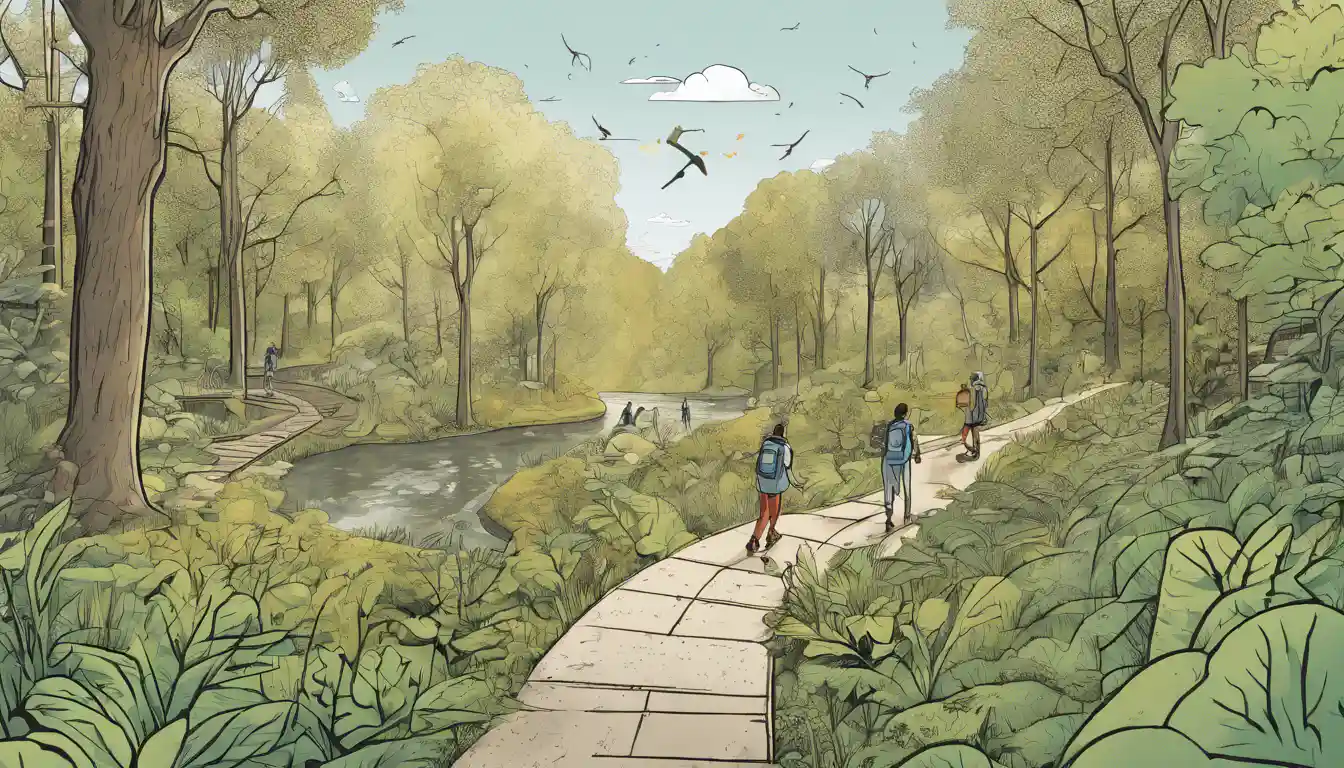
Nature trails are pathways designed for walking, hiking, or biking in natural environments. They are often constructed with the aim of preserving natural ecosystems while providing an accessible way for people to experience the beauty of nature. From a technical perspective, nature trails are typically planned with considerations such as terrain, soil stability, and environmental impact. This ensures that the trail minimizes erosion and maintains biodiversity.
In many regions, nature trails are designed using Geographic Information Systems (GIS) technology, which helps in mapping out the best routes based on topography and ecological significance. This technology allows trail developers to overlay various data layers, such as wildlife habitats or flood zones, ensuring that the trails are both safe and ecologically sound.
Nature trails serve multiple purposes, including recreation, education, and conservation. They play a crucial role in promoting physical wellness, mental health, and social interaction. For instance, studies have shown that spending time in nature can reduce stress and improve mood. A study published in the journal Environmental Health Perspectives found that exposure to green spaces is linked to decreased levels of anxiety and depression.
Real-world examples include the Appalachian Trail in the United States, which spans over 2,190 miles and is a hub for hikers seeking both adventure and an opportunity to connect with nature. Similarly, the Sentiero degli Dei (Path of the Gods) in Italy offers stunning views of the Amalfi Coast while promoting local tourism and conservation efforts.
1. **Get Involved in Local Trail Maintenance**: Many communities have organizations dedicated to maintaining local trails. Volunteering for trail cleanup days not only helps preserve the environment but also connects you with like-minded individuals who appreciate nature.
2. **Use Trail Apps**: Leverage technology to enhance your experience. Apps like AllTrails provide detailed maps, user reviews, and information about trail conditions, making it easier to plan your hikes.
3. **Educate Yourself and Others**: Take the opportunity to learn about the local flora and fauna while on the trail. Consider leading a guided nature walk for friends or family, sharing insights about the environment and the importance of conservation.
In the context of Web3 and digital innovation, nature trails can benefit from augmented reality (AR) applications that enhance the user experience. For example, AR can provide real-time information about the plants and animals you encounter, creating an interactive learning experience. The integration of QR codes along trails can allow hikers to access additional information or even digital art installations that reflect the local ecosystem.
Moreover, as nature trails become integrated with blockchain technology, there are opportunities for creating digital tokens or NFTs that could represent contributions to trail maintenance or conservation efforts, providing a new funding mechanism for preserving these vital spaces.
The significance of nature trails extends beyond recreation; they are essential for environmental education and community engagement. According to research presented at the 2024 International Conference on Environmental Resources and Energy Engineering, sustainable practices in outdoor spaces, including nature trails, are crucial for fostering environmental stewardship among communities.
Additionally, collaborative projects between artists and scientists, as noted in studies exploring the Anthropocene, highlight the role of nature trails in social learning processes. Such interdisciplinary approaches can cultivate a deeper appreciation for both art and nature, emphasizing the interconnectedness of ecosystems and human experiences.
Digital innovation refers to the use of digital technology to create new or improved processes, products, or services that significantly enhance customer experience and operational efficiency. It encompasses a wide range of technologies including artificial intelligence (AI), machine learning, blockchain, augmented reality (AR), and the Internet of Things (IoT).
The technical aspects can vary greatly, from the implementation of a new software system to the creation of a decentralized application (DApp) that operates on a blockchain. In the art world, digital innovation can manifest in ways such as virtual museums, interactive installations, and NFTs (non-fungible tokens) that allow artists to monetize their work in novel ways.
Digital innovation is crucial in today’s rapidly evolving technological landscape. It not only drives efficiency and reduces costs but also enables new forms of artistic expression and audience engagement.
For instance, the collaboration between artists and scientists showcased in the 2021 European Performing Science Night resulted in immersive art experiences that highlighted the importance of interdisciplinary approaches to problem-solving in the Anthropocene era. This project involved 28 artists and scientists and underscored the significance of interaction and group dynamics in creating impactful art.
Moreover, the development of a virtual museum for ancient artifacts demonstrates how digital innovation can transform art appreciation. By combining computer photography and binocular stereoscopic technology, this project allowed visitors to interact with artifacts in a multi-faceted way, enhancing their visual cognition and aesthetic evaluation. Such advancements not only preserve cultural heritage but also make it accessible to a wider audience.
The integration of Web3 technologies, including blockchain and smart contracts, is transforming how art is created, bought, and sold. For instance, NFTs leverage blockchain to certify ownership of digital assets, allowing artists to sell their work directly to consumers without intermediaries. In addition, decentralized platforms provide artists with a global audience, democratizing access to their work.
Furthermore, the use of AI in art creation—such as generative art—opens new avenues for creativity that were previously unimaginable. One notable example is the collaboration between artists and scientists to visualize complex scientific phenomena, such as the Higgs boson discovery, through immersive art installations. This not only aids in public understanding of scientific concepts but also enriches the art community's engagement with contemporary issues.
According to a study on the impact of immersive learning environments, students' performance improved significantly when utilizing VR compared to traditional digital learning media. This highlights the effectiveness of digital innovation in enhancing educational outcomes. Additionally, a report from ICEREE 2024 indicates that technological innovations in sustainable energy and environmental protection are critical for addressing complex global challenges, further demonstrating the tangible benefits of digital innovation across various fields.
Innovation in art refers to the introduction of new ideas, methods, or products that challenge the traditional boundaries of artistic expression. This encompasses a wide range of mediums and technologies, from digital painting software to virtual reality installations. One significant aspect of innovation is the use of advanced technologies like artificial intelligence (AI) and blockchain, particularly in the context of Web3. For instance, AI can generate art based on algorithms that analyze existing works, creating unique pieces that push the limits of creativity.
Similarly, blockchain technology allows for the creation of non-fungible tokens (NFTs), which provide verifiable ownership of digital art, thus transforming how artists and collectors engage with the medium.
The importance of innovation in art cannot be overstated; it not only enriches the creative landscape but also addresses complex societal issues. For example, a collaborative project named "Performing Science Night" involved 28 artists and scientists who created immersive artworks to tackle the challenges of the Anthropocene, showcasing how interdisciplinary collaboration can lead to profound insights and social learning outcomes.
The study indicated that skills in interpersonal relationships were vital to the project's success, highlighting the potential for art to foster community and dialogue around pressing environmental and social issues.
Moreover, in 2024, the International Conference on Environmental Resources and Energy Engineering (ICEREE 2024) will provide a platform for discussing technological innovations aimed at sustainable energy and environmental protection, further illustrating how art and science can intersect to drive societal change.
For those looking to engage with innovation in art, consider these actionable tips:
As we delve deeper into the technical aspects of innovation in art, the connection to Web3 technologies becomes apparent. The rise of NFTs has revolutionized how artists monetize their work. According to a report from NonFungible.com, the NFT market generated approximately $2.5 billion in the first quarter of 2021 alone, indicating a significant shift in how art can be bought and sold.
This model not only provides artists with direct income but also allows for royalties on secondary sales, ensuring that creators continue to benefit from their work.
Furthermore, technologies like VR and AR are being utilized in educational settings to enhance learning outcomes for art students. Research indicates that immersive learning environments (ILEs) improve performance and reduce cognitive load compared to traditional digital learning media, providing a more engaging and effective educational experience.
In this exploration of "From Nature Trails to NFTs," we’ve journeyed through the intersection of digital innovation and art appreciation. We began by examining nature trails, which not only serve as pathways through our natural landscapes but also play a vital role in community engagement and environmental education. We then delved into the realm of digital innovation, highlighting how technologies like artificial intelligence, virtual reality, and blockchain are transforming the art world, making it more accessible and interactive. The rise of NFTs has opened up new revenue streams for artists while creating unique ways to experience and own digital art.
Looking ahead, the implications of these developments are profound. As digital tools continue to evolve, we may see further integration of art and technology, leading to immersive experiences that blend education, environmental awareness, and artistic expression. The potential for collaborative projects between artists and scientists, as demonstrated by initiatives like the European Performing Science Night, could lead to innovative solutions for pressing global challenges.
As we stand at this exciting crossroads, consider how you can engage with these innovations. Whether it's exploring local nature trails, participating in digital art initiatives, or simply sharing this knowledge with others, your involvement could help shape the future of art appreciation. The question remains: how will you harness the power of digital innovation to redefine your own artistic journey?
- Artistic Manifestations around the Higgs Boson
- Sights and Sounds of Big Data: Ryoji Ikeda’s Immersive Installations
- An empirical study of virtual museum based on dual-mode mixed visualization: the Sanxingdui bronzes

Get notified about new articles, coffee tips, and Web3 insights.
This site participates in affiliate programs and may earn a commission when a link is clicked and a purchase is made. The site is not responsible for any issues or troubles related to the products or services purchased through the use of this site.

DO&COFFEE loves coffee and technology, exploring the potential of NFTs and blockchain. Learn more →
DO&COFFEE loves coffee and technology, exploring the potential of NFTs and blockchain. Learn more →