coffee
2024/08/07
The Coffee Cantata, officially known as BWV 211, is a musical composition by Johann Sebastian Bach that humorously explores the growing popularity of coffee in 18th-century Europe. This cantata illustrates a unique intersection of coffee culture and musical expression, showcasing how these two elements can enhance social interaction and cultural discourse. As coffeehouses emerged as vibrant centers for conversation and creativity, Bach's work serves as both a reflection and commentary on this evolving social landscape.
Understanding the importance of this topic is essential, as coffeehouses were not just places to enjoy a beverage; they were vital social hubs that facilitated the exchange of ideas, much like modern co-working spaces. For instance, research indicates that between 1650 and 1789, coffeehouses played a crucial role in the development of Enlightenment thought, acting as venues for political discussion and intellectual exchange (Reynolds, 2022). The Coffee Cantata encapsulates this dynamic, providing a window into the societal debates surrounding coffee consumption—whether it was seen as a vice or a stimulant for creativity.
In this blog post, we will delve into the main ideas surrounding the Coffee Cantata and its relationship with coffee culture, exploring how they interconnect through themes of socialization, artistic expression, and historical significance. We will examine Bach's musical techniques, the cultural context of 18th-century coffeehouses, and the broader implications of this intersection in today’s society. By drawing on both historical and contemporary examples, we aim to illustrate how Bach’s work remains relevant in discussions about community, creativity, and connection.
Ultimately, the Coffee Cantata is more than just a musical piece; it invites us to reflect on our own interactions with coffee and music, encouraging us to explore their roles in fostering community and creativity in our lives.
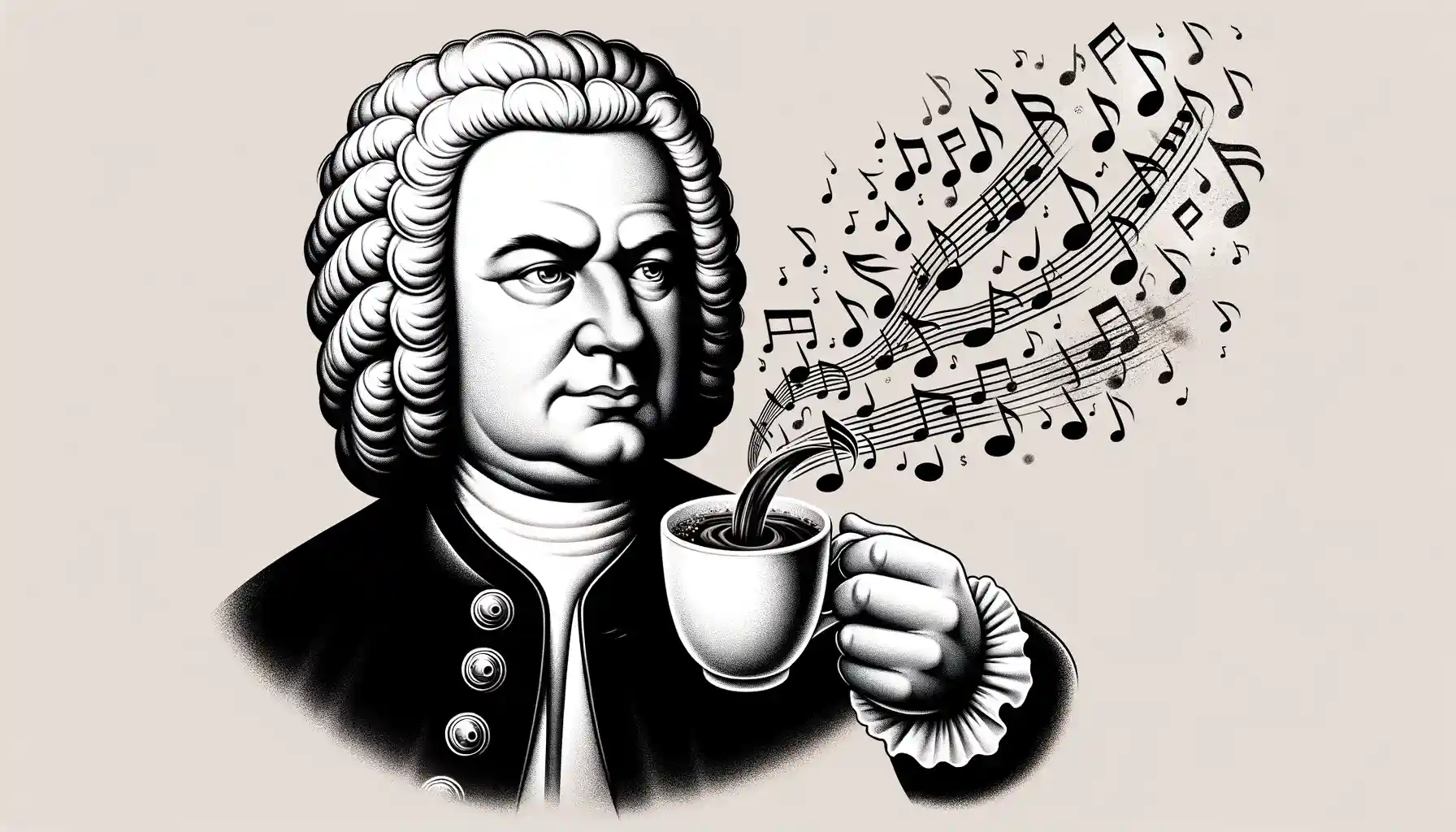
The Coffee Cantata, officially known as BWV 211, is a delightful and whimsical musical work by Johann Sebastian Bach, composed in the early 18th century. This cantata, written for a small ensemble, is a unique blend of humor and social commentary, centered around the theme of coffee—a beverage that was rapidly gaining popularity in Europe at the time.
Musically, the Coffee Cantata is structured into several movements, combining arias and recitatives that engage in a lighthearted dialogue. The work features a soprano soloist (representing the daughter, Lieschen) who expresses her love for coffee, while her father (a bass) struggles to understand her obsession. The instrumentation is modest, typically including a small string ensemble complemented by continuo, which highlights Bach's ability to create rich textures even with limited resources.
One notable technical aspect is how Bach employs melodic motifs that reflect the characters' emotions—Lieschen's exuberance is conveyed through lively, ascending phrases, while her father's more serious demeanor is mirrored in his more grounded, descending lines. This use of musical language to express character and emotion is a hallmark of Bach's compositional style.
The Coffee Cantata holds a significant place in both musical and cultural history, serving as an early commentary on the societal changes brought about by coffee culture in the 18th century. During this period, coffeehouses emerged as important social hubs, akin to the "third places" described in contemporary sociological studies. They functioned not only as venues for enjoying coffee but also as platforms for discussion and the exchange of ideas, much like the coffeehouses analyzed in the studies of E. Wesley Reynolds and others.
For example, the Coffee Cantata reflects the debates around coffee consumption that were prevalent in society, where some viewed it as a vice while others embraced it as a stimulant for creativity and conversation. This work is an artistic representation of the dynamics within these coffeehouses, illustrating how they served as crucibles for Enlightenment thought and community building, particularly in the Atlantic world between 1650 and 1789.
Interestingly, the Coffee Cantata can serve as an analogy for understanding modern technological frameworks, such as Web3. Just as coffeehouses facilitated the exchange of ideas and socio-political discourse in Bach's time, Web3 technologies aim to create decentralized platforms for collaboration and community engagement today. The cantata’s structure—interacting voices and contrasting perspectives—mirrors the potential for diverse voices to come together in a blockchain network where each participant can contribute and innovate freely.
Moreover, the cantata’s exploration of coffee's social implications parallels discussions about the role of technology in shaping our interactions. As coffeehouses were seen as spaces for enlightenment and discussion, modern digital platforms can likewise serve as venues for the exchange of ideas, pushing boundaries and fostering community in the digital age.
According to one study, coffeehouses played a pivotal role in the development of Enlightenment thought, acting as "important social hubs" where "the exchange of ideas flourished" (Reynolds, 2022). Another research paper highlights how these spaces provided a platform for community formation and political debate, emphasizing their historical significance as catalysts for social change.
Thus, the Coffee Cantata not only entertains but also invites reflection on the intersections of culture, community, and technology—an enduring legacy that continues to resonate today.
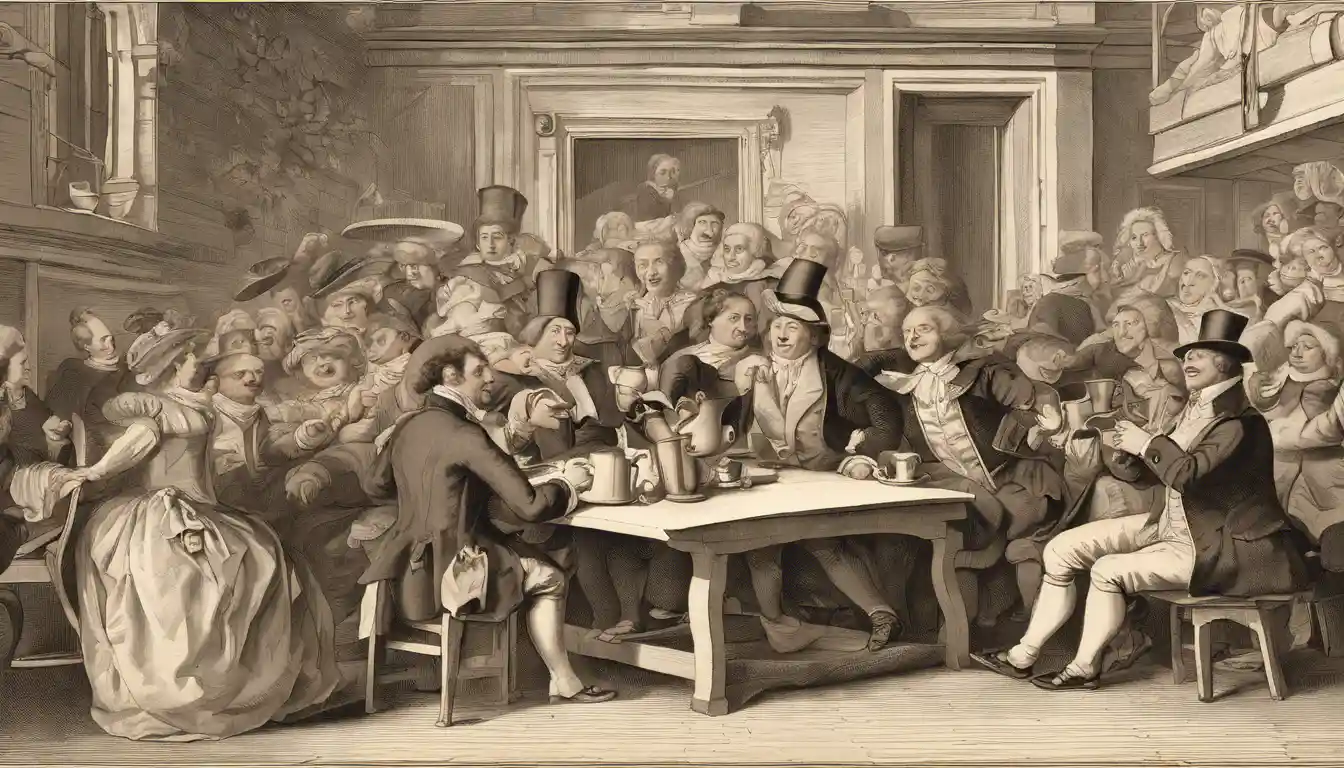
Johann Sebastian Bach's relationship with coffee is most famously encapsulated in his Coffee Cantata (BWV 211), a delightful musical commentary on the social and cultural phenomena surrounding coffee in 18th-century Germany. The cantata humorously portrays a daughter's obsession with coffee, much to her father's dismay, as he believes it hinders her potential for marriage. From a technical standpoint, the Coffee Cantata is structured as a dialogue, showcasing Bach's mastery in fusing lyrical melodies with intricate counterpoint. The use of recitative and aria forms allows for both narrative and emotional expression. The music itself was intended for performance in coffee houses, which were pivotal in shaping social discourse during Bach's time.
The significance of Bach's Coffee Cantata extends beyond its musical composition; it reflects the broader cultural context of coffee as a social lubricant. Coffee houses in the 18th century became centers for intellectual exchange, discussion, and artistic creation. For example, the coffee house culture in cities like Leipzig—where Bach lived—served as a melting pot for ideas and social interaction, much like modern co-working spaces. Academic studies highlight how coffee houses facilitated the Enlightenment by providing a platform for sharing knowledge and fostering community, as evidenced in the paper “Coffeehouse Culture in the Atlantic World, 1650-1789,” which notes that these venues were instrumental in the exchange of ideas and the formation of new social norms.
In the evolving landscape of Web3, the principles of community engagement seen in Bach's time can be mirrored through decentralized platforms. Just as coffee houses facilitated knowledge exchange, Web3 technologies can foster collaborative environments. For instance, utilizing decentralized autonomous organizations (DAOs) to create coffee enthusiasts' communities can enable shared ownership of coffee-related projects, from sourcing beans to promoting coffee culture. The Coffee Cantata serves as a reminder that music and coffee have historically bridged gaps between individuals, and with the advent of blockchain technology, we can establish new forms of social interaction that prioritize creativity and collaboration.
Studies such as “Coffeehouse Culture in the Atlantic World, 1650-1789” highlight the role of coffee houses as vital social hubs, indicating that they significantly influenced the spread of Enlightenment ideas and cultural practices. Additionally, research on the concept of “third places” illustrates how locations like coffee houses provide essential social interaction opportunities, crucial for community building. According to E. Wesley Reynolds, the coffee house was a “crossroads of commerce and culture,” reinforcing its importance in fostering social discourse.
Classical music, a genre with roots dating back to the medieval period, is characterized by its structured compositions, intricate harmonies, and a wide range of instruments. It encompasses various forms, such as symphonies, concertos, and operas, each offering a unique auditory experience. Coffee, on the other hand, has a rich cultural history that has evolved since its discovery in the 15th century. The interplay between classical music and coffee is not just about enjoying a cup while listening to a symphony; it reflects a deeper cultural exchange that has shaped social interactions.
In technical terms, classical music often utilizes complex musical scales, time signatures, and dynamics that can enhance the experience of enjoying coffee. For instance, the rhythm of a fast-paced concerto can invigorate the senses, much like a strong espresso, while the serene notes of a lullaby might complement a calming cup of chamomile tea. The ambient sounds of classical music can create an inviting atmosphere in coffee shops, turning them into hubs of creativity and socialization.
The significance of the coffeehouse culture in the Atlantic world from 1650 to 1789 showcases how coffee was more than just a beverage; it was a catalyst for social interaction and intellectual discourse. These establishments became venues for discussing political ideas, sharing knowledge, and fostering community among thinkers and creatives. For example, the renowned coffeehouses of Vienna not only served coffee but also hosted performances of classical music, thus intertwining cultural and social threads.
Moreover, the concept of "third places," as discussed in various studies, emphasizes how coffeehouses serve as spaces for social engagement outside of home and work. Research indicates that in places like Bandung, Indonesia, coffeehouses provide environments conducive to conversation and laughter, while maintaining cultural values and appropriate social distances. This illustrates how the combination of classical music and coffee can create a vibrant atmosphere for community building and creative expression.
In today’s world, the integration of classical music and coffee can also extend into the realm of technology. With the rise of Web3 technologies, coffee enthusiasts can explore decentralized platforms that promote local coffee artists and musicians. Imagine a blockchain-based application where local coffee shops can partner with classical musicians, allowing patrons to enjoy live performances while supporting their community.
Furthermore, advancements in sound technology mean that coffee shops can enhance their ambiance through high-quality sound systems that deliver classical music with precision. This creates a sensory experience that can attract a diverse clientele, from students to professionals, looking for an inspiring environment.
According to research conducted by E. Wesley Reynolds, coffeehouses in the Atlantic world significantly influenced the spread of Enlightenment ideas, acting as social hubs where knowledge was exchanged and new ideas flourished. This highlights the cultural importance of these venues in shaping societal norms and intellectual discourse.
Moreover, studies exploring the “third place” concept emphasize the role of coffeehouses in fostering social interactions. These studies indicate that spaces promoting casual conversation and creativity, such as those enhanced by classical music, are vital for community bonding and cultural exchange.
In this exploration of the Coffee Cantata by Johann Sebastian Bach, we have delved into the delightful interplay between music and coffee culture in the 18th century. Key takeaways include the cantata's humorous portrayal of a daughter's obsession with coffee, reflecting broader societal debates about this popular beverage, and its significance as a lens through which we can understand the role of coffeehouses as vital social hubs for intellectual exchange. We also highlighted how Bach's musical techniques, including melodic motifs and structured dialogue, enrich the narrative and emotional depth of the work.
Looking ahead, the implications of this intersection between coffee and music are profound. As coffee culture continues to evolve, integrating modern technologies such as Web3 could foster new forms of community engagement and creativity in coffeehouses. These spaces could once again become centers for social discourse, mirroring the intellectual vibrancy of Bach's time, potentially leading to a resurgence of communal experiences that blend music, conversation, and coffee.
As we reflect on this rich tapestry of culture, consider how your own coffee rituals might be enhanced by music. Why not create your own coffee and music night, where you can reconnect with friends and ideas over a warm cup? Explore the connections between your favorite brews and tunes, and let the harmony of coffee and music inspire your creativity.
- THE APPROPRIATE THIRD PLACES: A PERSPECTIVE FROM THE MUSLIM YOUTH
- E. Wesley Reynolds III: Coffeehouse Culture in the Atlantic World, 1950-1789
- Coffeehouse Culture in the Atlantic World, 1650-1789,
- Reynolds, E. Wesley. Coffeehouse Culture in the Atlantic World, 1650–1789
- THE APPROPRIATE THIRD PLACES: A PERSPECTIVE FROM THE MUSLIM YOUTH
- North American independent coffeehouse culture: a comparison of Seattle with Vancouver
- Fostering Enlightenment Coffeehouse Culture in the Present

A Revolution for the Caffeine-Free Life

Get notified about new articles, coffee tips, and Web3 insights.
This site participates in affiliate programs and may earn a commission when a link is clicked and a purchase is made. The site is not responsible for any issues or troubles related to the products or services purchased through the use of this site.

DO&COFFEE loves coffee and technology, exploring the potential of NFTs and blockchain. Learn more →
DO&COFFEE loves coffee and technology, exploring the potential of NFTs and blockchain. Learn more →