crypto
2025/11/22

This article contains affiliate links. We may earn a small commission at no extra cost to you. Learn more
Have you ever wondered how artificial intelligence and cryptocurrencies will shape the future of technology? As we stand on the brink of a digital revolution, the merging of Web3 development with these groundbreaking technologies is not just a trend; it's a transformative force redefining how we interact, create, and transact. In this evolving landscape, decentralized systems promise to create a world where ownership and privacy are paramount, and innovation flourishes through collaboration.
This blog post will explore how Web3 development harmonizes the realms of crypto and AI, paving the way for decentralized AI solutions that enhance collective innovation. From establishing AI marketplaces through blockchain technology to addressing the challenges of media integrity in the age of generative AI, we will delve into the ways these interlinked technologies are set to revolutionize industries and empower individuals. Join us on this journey as we navigate the future of technology and discover the new possibilities that arise when Web3, crypto, and AI converge.

As technology continues to advance, traditional artificial intelligence (AI) systems often fall prey to centralization issues. These centralized systems typically depend on proprietary datasets and outdated models, limiting their effectiveness and accessibility. Decentralized AI offers a refreshing alternative by allowing multiple parties to collaborate without relying on a single controlling entity. This collaborative spirit is essential for innovation, enabling data owners, AI developers, and cloud vendors to work together in an open framework. Such collaboration not only democratizes access to AI tools but also addresses issues of data ownership and privacy, which are increasingly crucial in today's data-driven world.
In the paper 'Decentralized and Collaborative AI on Blockchain,' researchers propose a framework that empowers participants to build a shared dataset and utilize smart contracts for collaborative machine learning. This framework allows organizations and individuals to combine their resources while preserving the ownership of their data—a vital feature that aligns with the values of the Web3 ethos. For instance, a healthcare provider can contribute anonymized patient data to enhance AI models without relinquishing ownership or compromising privacy. Such collaboration fosters an environment ripe for innovation, as diverse data inputs lead to more robust AI models.
The paper 'Ownership preserving AI Market Places using Blockchain' takes this concept further by introducing a blockchain-based system that facilitates collaborative training of machine learning models. In this trustless AI marketplace, data owners can maintain their rights while allowing AI developers access to necessary data for model training. By employing smart contracts, the system ensures that data usage complies with ownership terms, effectively bridging the gap between data privacy and innovation. This mechanism not only enhances trust but also encourages more organizations to participate in AI development, leading to a broader array of solutions that benefit society as a whole.
The intersection of blockchain and AI is not just theoretical; several real-world projects are utilizing these technologies to drive innovation. For example, in journalism, the study 'Blockchain solutions for generative AI challenges in journalism' highlights how blockchain can enhance the authenticity of news content through content provenance verification. By ensuring that the source of information can be traced back, journalists can combat misinformation and uphold integrity in reporting. Similarly, companies like Attestiv and OriginStamp are forging paths to ensure content verification, combining the trust mechanisms of blockchain with AI's capabilities.
Decentralized AI represents a crucial development in the collaborative innovation landscape of Web3. By integrating blockchain technology with AI, we can address the limitations of current systems, fostering a more inclusive and trustworthy environment for AI development. As this synergy continues to evolve, we can expect a future where AI applications are not only more effective but also more equitable, benefiting all stakeholders involved in the process.
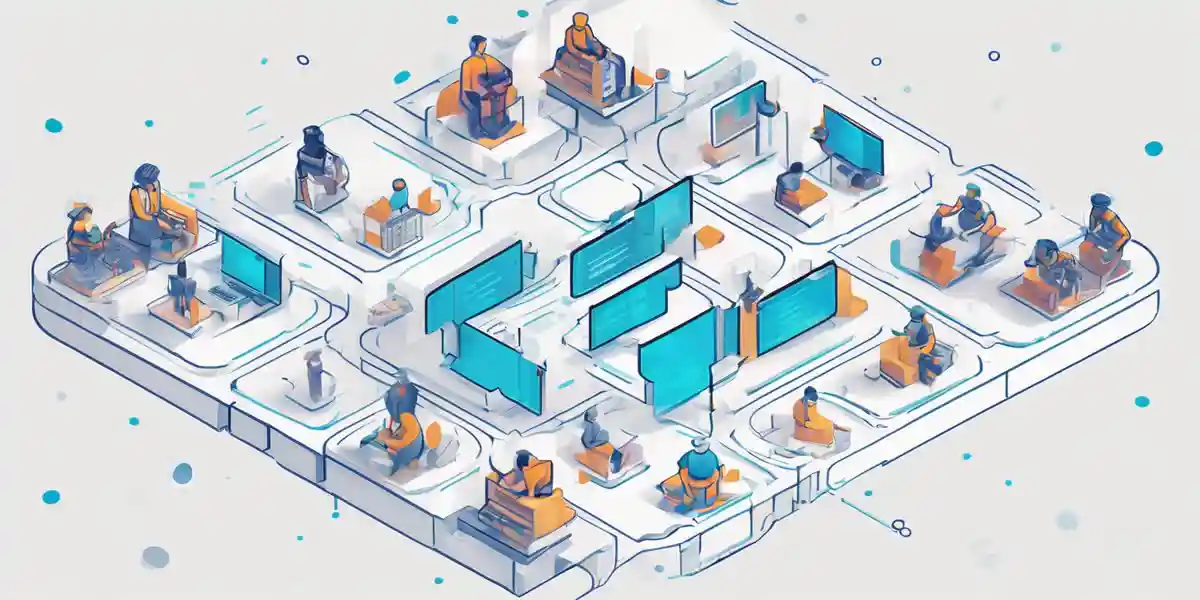
As artificial intelligence (AI) continues to permeate various sectors, the traditional models often reveal centralization issues, particularly during data acquisition and model training. For instance, many AI applications rely heavily on proprietary datasets and outdated models, which can stifle innovation and limit accessibility. This is where blockchain technology can play a pivotal role in establishing ownership and trust, forming the backbone of decentralized AI marketplaces.
According to the research paper 'Decentralized and Collaborative AI on Blockchain,' a framework for decentralized machine learning can effectively address these centralization problems. By facilitating a collaborative approach, participants can contribute to a shared dataset while leveraging smart contracts to automate various aspects of the transaction process. This model not only promotes inclusivity but also enhances the quality of AI systems by allowing diverse inputs, ultimately leading to more robust and adaptable models.
The integration of blockchain solutions into AI marketplaces ensures that data owners maintain control over their data. The paper 'Ownership preserving AI Market Places using Blockchain' lays the groundwork for a new infrastructure that links data owners, cloud vendors, and AI developers within a trustless environment. This blockchain-based system allows data owners to collaborate on AI development while assuring them of their ownership rights and privacy. By employing cryptographic techniques, users can verify the provenance of their data, ensuring that unauthorized access or duplication is prevented.
For example, imagine a scenario where an agricultural researcher has collected unique data on crop yields. By using blockchain technology, they can create a secured and traceable record of their data. AI developers can then access this information to refine their models, all while the researcher retains ownership and receives compensation for their contributions. Such systems facilitate a more equitable distribution of benefits among stakeholders, fostering a healthier ecosystem where everyone is incentivized to collaborate and innovate.
Several emerging platforms exemplify the potential of blockchain in AI marketplaces. One compelling case is AI-driven news verification tools. The research paper on 'Blockchain solutions for generative AI challenges in journalism' identifies how blockchain’s ability to verify content provenance can enhance journalistic integrity. By utilizing blockchain for verifying sources and tracking the origin of information, media outlets can build greater trust with their audiences.
Another noteworthy example is in healthcare data sharing. A blockchain-based system could enable healthcare providers to securely share patient records with AI systems while ensuring that patients' privacy rights are honored. This allows AI systems to develop more precise predictive models, ultimately improving patient care outcomes without sacrificing data ownership.
Such applications showcase how blockchain technology not only enhances trust through ownership preservation but also stimulates collaborative efforts among diverse stakeholders, driving the growth of innovative AI solutions. As we navigate the future of Web3 development, the fusion of these technologies promises a more transparent and fair digital ecosystem for both creators and users alike.

As generative AI technologies become increasingly prevalent in content creation, they pose significant challenges to media integrity. These tools have the capability to produce realistic and engaging content, which can blur the lines between fact and fiction. This raises concerns about misinformation and copyright infringement, as well as questions regarding ownership and authenticity of the generated material. In an age where deepfakes and fabricated narratives can easily spread, maintaining the trustworthiness of information is more crucial than ever. This is where the combination of Web3 technologies and generative AI can play a vital role in promoting media integrity.
Blockchain technology offers a powerful solution for the challenges faced by generative AI in media integrity. A study on blockchain solutions for generative AI challenges in journalism highlights how the technology can enhance authenticity and integrity by verifying content provenance. For instance, implementing blockchain enables the creation of an immutable ledger that records the origin and modifications of media assets. This ensures that anyone accessing a piece of content can trace its history, verifying its authenticity and confirming whether it has been altered. Solutions like Attestiv and OriginStamp exemplify how blockchain can provide robust verification mechanisms, allowing consumers to trust the content they engage with.
The advent of decentralized machine learning, as discussed in the paper 'Decentralized and Collaborative AI on Blockchain', further emphasizes the importance of collaboration among data owners, AI developers, and cloud vendors. Through a decentralized framework, participants can collaboratively build a shared dataset without relinquishing ownership of their data. This model not only empowers content creators and data owners but also protects their privacy. By utilizing smart contracts—self-executing contracts with the terms directly written into code—stakeholders can ensure that all parties retain their ownership while enabling the responsible use of data in training generative AI models. This collaborative approach ultimately leads to higher-quality outputs that adhere to ethical standards.
Additionally, the emergence of ownership-preserving AI marketplaces, as detailed in the research on ownership preserving AI marketplaces using blockchain, is reshaping how data and AI models are exchanged. These marketplaces operate in a trustless environment, meaning that transactions can occur without needing to rely on a central authority or intermediary. By allowing data owners to maintain control over their contributions while providing AI developers access to diverse datasets, the integrity of generated content is more likely to be safeguarded. This shift not only promotes a fairer distribution of value but also enhances the overall integrity of the media being produced and consumed.
In summary, the intersection of Web3 technologies and generative AI presents innovative solutions for addressing the critical challenges of media integrity. By utilizing blockchain for content verification, encouraging decentralized collaboration, and establishing ownership-preserving marketplaces, the future of media could be significantly more trustworthy and authentic. As we navigate this evolving landscape, harnessing these technologies will be essential in promoting a harmonious coexistence between creativity and integrity in media.
As we've explored throughout this blog post, the convergence of Web3 development, cryptocurrency, and artificial intelligence is paving the way for a transformative future. With decentralized AI fostering innovation and trust, the establishment of blockchain-based AI marketplaces is set to empower developers and users alike, ensuring ownership and access to data. Furthermore, addressing the challenges posed by generative AI through Web3 technologies is key to enhancing media integrity and establishing a framework for responsible AI usage.
Key takeaways from our discussion highlight the potential of decentralized systems to enhance collaboration, provide equitable access to advanced tools, and build trust in AI applications. By uniting these powerful technologies, we are not just witnessing the birth of a new digital landscape, but also unlocking opportunities for a more just and innovative world.
As we navigate this exciting frontier, we encourage you to stay informed and engaged. Explore how you can be part of this evolution, whether by participating in decentralized platforms, learning more about the potential of AI in your field, or contributing to the discussions on ethical AI practices. Together, let's embrace the synergy of Web3, crypto, and AI and shape a future that reflects our collective vision and values.
Get notified about new articles, coffee tips, and Web3 insights.
This site participates in affiliate programs and may earn a commission when a link is clicked and a purchase is made. The site is not responsible for any issues or troubles related to the products or services purchased through the use of this site.

DO&COFFEE loves coffee and technology, exploring the potential of NFTs and blockchain. Learn more →
DO&COFFEE loves coffee and technology, exploring the potential of NFTs and blockchain. Learn more →