crypto
2025/03/23
The advent of blockchain technology has ushered in a new era for gaming, with smart contracts at the forefront of this revolution. As automated agreements that execute without intermediaries, smart contracts are fundamentally reshaping the landscape of blockchain games, enhancing not only game mechanics but also the overall player experience. This blog post delves into the transformative power of smart contracts in gaming, exploring how they facilitate seamless transactions, bolster security, and foster trust among players. By governing in-game economies and enabling innovative decentralized finance (DeFi) mechanisms, smart contracts are not just enhancing game design but are also turning gaming into a legitimate income source for players. Furthermore, we will discuss future trends and opportunities in blockchain game development, highlighting the potential for continuous innovation that smart contracts bring to the industry. As we navigate through these topics, it becomes clear that the integration of smart contracts is not merely a technological enhancement; it is a pivotal shift that could redefine interactive entertainment as we know it.
Smart contracts, a pivotal innovation in blockchain technology, are self-executing contracts with the agreement directly written into code. They operate on decentralized networks, primarily utilizing blockchain infrastructure to ensure transparency, security, and immutability. The significance of smart contracts in the realm of blockchain games cannot be overstated, as they fundamentally alter how transactions and agreements are executed within gaming ecosystems.
One of the core functionalities of smart contracts is their ability to automate processes. This automation drastically reduces the need for intermediaries, thereby minimizing costs and potential fraud. For instance, in the case of CryptoKitties, a blockchain-based game where players breed and trade virtual cats, smart contracts govern the ownership and transaction of each digital asset. Each cat is represented as a unique non-fungible token (NFT), and the underlying smart contracts ensure that ownership transfers occur seamlessly and securely. This not only enhances user trust but also streamlines the gaming experience.
Smart contracts enhance security by leveraging the inherent properties of blockchain technology. They are immutable once deployed, meaning that unauthorized changes cannot be made without consensus from the network. An example can be observed in the game Axie Infinity, where players collect and battle creatures known as Axies. The game employs smart contracts to guarantee the authenticity and ownership of each Axie, ensuring that players have true ownership of their assets, which can be traded or sold without fear of duplication or fraud.
Beyond simple transactions, smart contracts allow for complex interactions and mechanics within games. Developers can create intricate game rules that automatically execute based on player actions. For example, in Decentraland, a virtual reality platform, users can buy, sell, and develop parcels of land through smart contracts. These contracts can incorporate various conditions and create a dynamic gaming environment that evolves based on user engagement, fostering a vibrant economy and a more immersive experience.
As the gaming industry embraces blockchain and smart contracts, the potential for innovative game design and economic models expands significantly, paving the way for a revolution in how games are developed and played.
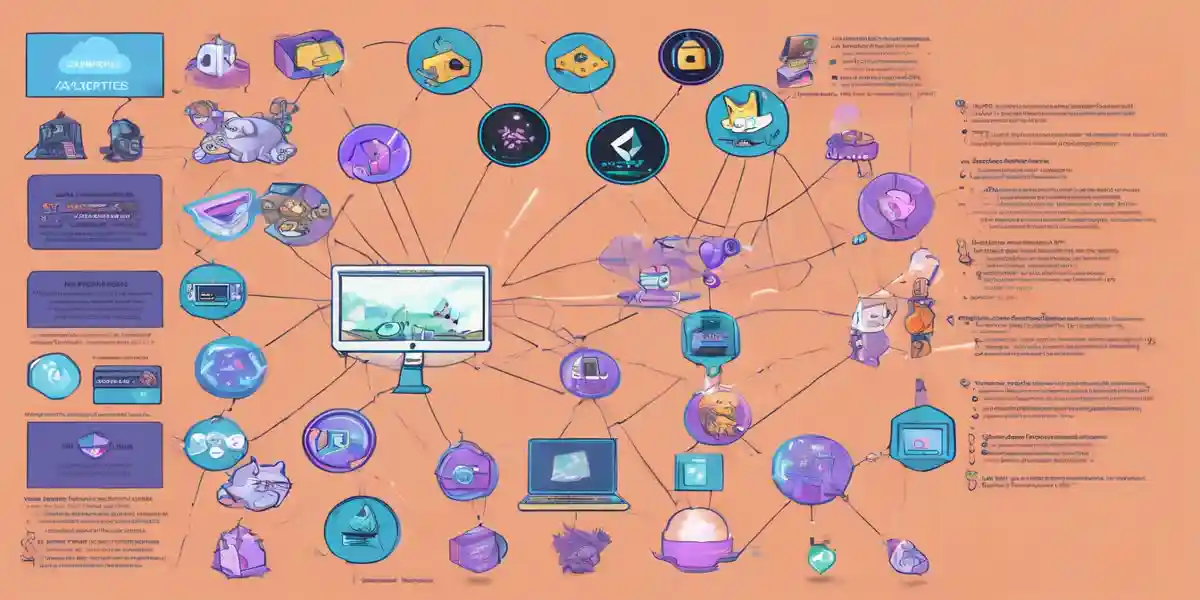
Blockchain technology, often heralded as a revolutionary force in various sectors, including finance, supply chain, and gaming, operates as a decentralized ledger that records transactions across many computers. This decentralization ensures that no single entity controls the entire network, fostering transparency and security. Three key aspects of blockchain technology are its immutability, transparency, and security, each contributing significantly to its transformative potential.
One of the defining characteristics of blockchain is its immutability. Once a transaction is recorded on the blockchain, it cannot be altered without consensus from the network participants. This feature is particularly beneficial in gaming, where game assets and transactions need to be reliable and tamper-proof. For instance, the game "CryptoKitties" allows players to buy, sell, and breed virtual cats using Ethereum's blockchain. Each CryptoKitty is unique and cannot be duplicated, thanks to the immutable nature of blockchain, ensuring that ownership is clear and verifiable.
Blockchain technology promotes unparalleled transparency. Every transaction is visible to all participants and can be audited in real-time. This is crucial in gaming environments where fairness is paramount. For example, the game "Axie Infinity" utilizes blockchain to allow players to track the history of their in-game assets. Players can see how many times a particular Axie has been sold, providing insights into its value and history, which is not typically available in traditional gaming systems. This level of transparency builds trust among players and enhances the gaming experience.
Security is another cornerstone of blockchain technology. Each transaction is encrypted and linked to the previous transaction, forming a chain of blocks that is almost impossible to hack. This high level of security is essential for protecting users' assets in blockchain games. A case study worth noting is "Decentraland," a virtual reality platform powered by the Ethereum blockchain, where users can buy, develop, and sell parcels of virtual land. The security features of blockchain prevent unauthorized access and ensure that users' investments are safeguarded against fraud.
In summary, the unique features of blockchain technology—immutability, transparency, and security—are fundamentally changing the landscape of gaming. By leveraging these attributes, developers can create more engaging, fair, and secure gaming experiences that not only entertain but also empower players.
Smart contracts are increasingly recognized as a pivotal element in the evolution of blockchain gaming, fundamentally altering how games are designed, operated, and monetized. These self-executing contracts, embedded within blockchain networks, automate processes and enforce agreements without intermediary intervention. This section explores three key dimensions in which smart contract development is revolutionizing the gaming landscape.
One of the most significant advantages of utilizing smart contracts in blockchain games is the enhancement of trust and transparency. Traditional gaming ecosystems often rely on centralized servers, creating potential risks of fraud and manipulation. In contrast, smart contracts operate on decentralized networks, where every transaction is recorded on a public ledger. For instance, the game Axie Infinity employs smart contracts to manage in-game assets and transactions, ensuring that players can verify ownership and transfer of assets seamlessly. This transparency not only fosters trust among players but also mitigates the risk of cheating or asset theft.
Smart contracts facilitate innovative play-to-earn models that allow players to earn real-world value through gameplay. Unlike traditional gaming models that often lock value within the game, smart contracts enable the tokenization of in-game assets, which can be traded on decentralized exchanges. A prime example is Decentraland, a virtual reality platform where users can buy, sell, and develop parcels of virtual land as NFTs (non-fungible tokens). The underlying smart contracts govern these transactions, ensuring fair trade and ownership rights. This economic incentive structure has not only attracted casual gamers but also investors looking to capitalize on virtual real estate.
Smart contracts also play a critical role in automated governance within blockchain games, empowering communities to participate actively in decision-making processes. Through decentralized autonomous organizations (DAOs), players can influence game development and direction based on collective voting. For example, the community-driven game, The Sandbox, allows users to propose and vote on game features and updates through smart contracts. This democratic approach not only enhances player engagement but also aligns game development with community interests, fostering a sense of ownership among players.
In summary, smart contracts are not just a technological advancement; they represent a fundamental shift in how games are created, played, and governed. With increased transparency, innovative economic models, and enhanced community participation, the integration of smart contracts in blockchain gaming is poised to redefine the gaming industry landscape.
In this exploration of how smart contracts are revolutionizing blockchain games, we delved into several key aspects that underscore their transformative potential. First, we examined the foundational role of smart contracts, emphasizing their ability to automate processes and facilitate trustless transactions. This automation not only enhances the efficiency of in-game economies but also empowers players through true ownership of in-game assets.
Next, we analyzed the implications of decentralized game development enabled by smart contracts. By allowing developers to create games that operate on decentralized networks, we are witnessing a shift from traditional gaming models towards more player-centric ecosystems. This paradigm not only fosters innovation but also encourages community engagement, as players have a stake in the game’s success and longevity.
Furthermore, we discussed the intersection of smart contracts and non-fungible tokens (NFTs), highlighting how they are reshaping asset creation and trading within the gaming landscape. The ability to tokenize unique in-game items has opened new avenues for monetization and creativity, ushering in a new era where players can generate real-world value from their gaming experiences.
These points matter significantly as they reflect broader trends in the gaming industry, illustrating a movement towards more decentralized, player-driven experiences. As blockchain technology continues to mature, the integration of smart contracts in gaming is poised to redefine not only how games are developed and played but also how value is created and distributed within these virtual worlds.
As we look to the future, it is clear that the potential of smart contracts in gaming is vast. We encourage you, the reader, to consider how these advancements may influence your own gaming experiences or development endeavors. Whether you are a player, developer, or investor, staying informed and engaged with these trends will be crucial as we unlock the full potential of blockchain technology in the gaming landscape. Embrace the change—explore, experiment, and be a part of this exciting evolution!

Get notified about new articles, coffee tips, and Web3 insights.
This site participates in affiliate programs and may earn a commission when a link is clicked and a purchase is made. The site is not responsible for any issues or troubles related to the products or services purchased through the use of this site.

DO&COFFEE loves coffee and technology, exploring the potential of NFTs and blockchain. Learn more →
DO&COFFEE loves coffee and technology, exploring the potential of NFTs and blockchain. Learn more →