technology
2026/01/27
This article contains affiliate links. We may earn a small commission at no extra cost to you. Learn more
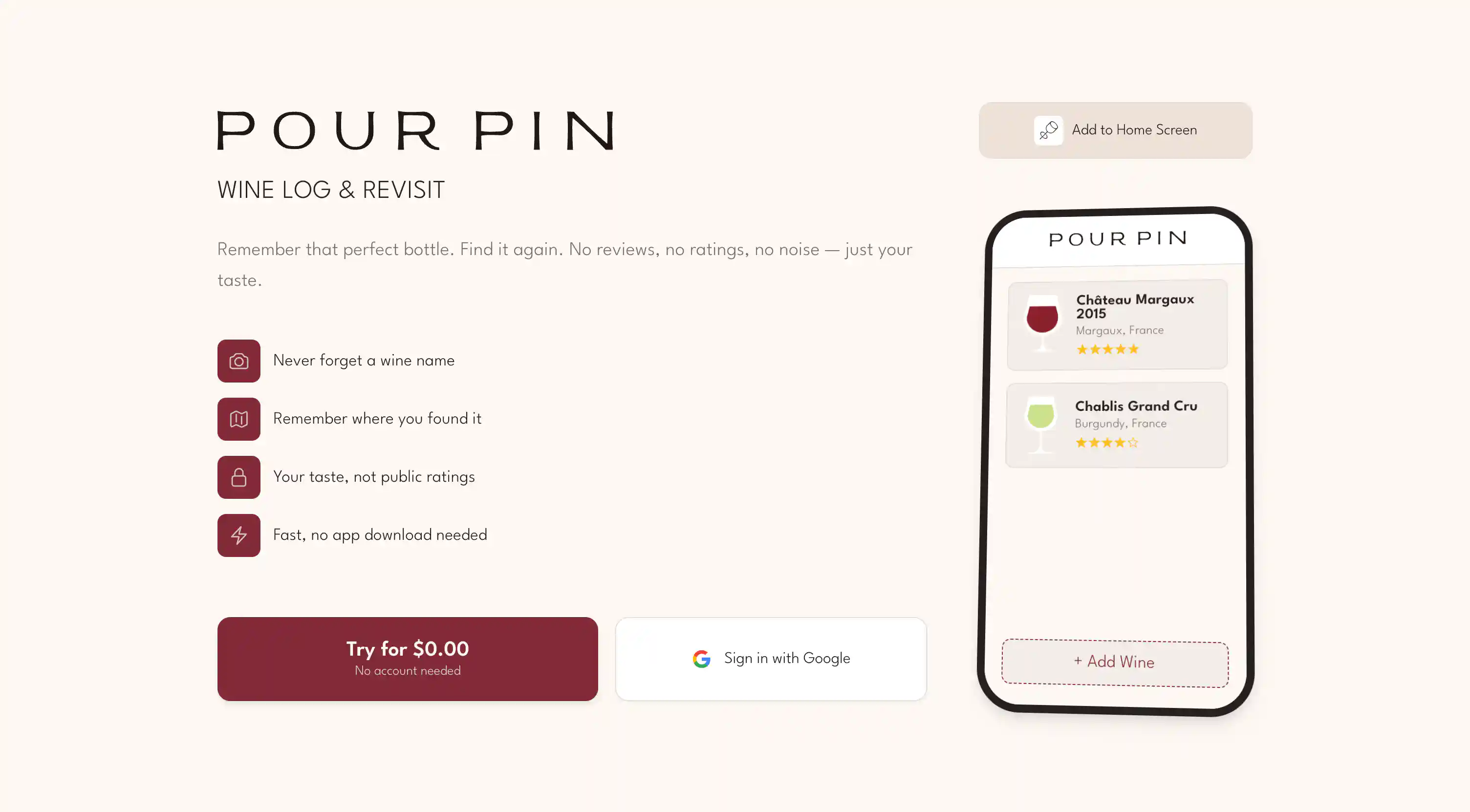
TL;DR
・Photos preserve proof, not answers.
・A minimal log design turns memories into searchable queries.
・PourPin is interesting less as a “wine app,” more as a case study in revisit-first recording.
You remember the feeling: “That was great.”
But the label, the bottle name, the place—by the next day, it’s already blurry.
Coffee and wine share the same failure mode: experiences fade by default.
So the record system has to assume forgetting.
A photo helps you prove you were there.
It doesn’t help you recreate the moment.
If you want to buy it again—or order it again—you need answers like:
• What was it, exactly?
• Where did I have it?
• Did I actually love it, or was the night just great?
• What did it taste like in one short line?
That’s why logging matters.
And it has to be designed in a way you’ll actually keep doing.
A revisit log is not a public review platform.
It’s not a social feed.
It’s a personal retrieval system for Future You.
The goal isn’t to write. The goal is to find.
And the uncomfortable truth is simple:
If logging feels like homework, you won’t do it—no matter how good your intentions are.
So the design constraint becomes: minimum effort, maximum recall.
A glass at a restaurant in a city you loved.
You remember the atmosphere, but the bottle name disappears.
PourPin’s workflow is aggressively simple:
・Snap the label
・OCR fills in the basics
・Add a star rating + a short hint
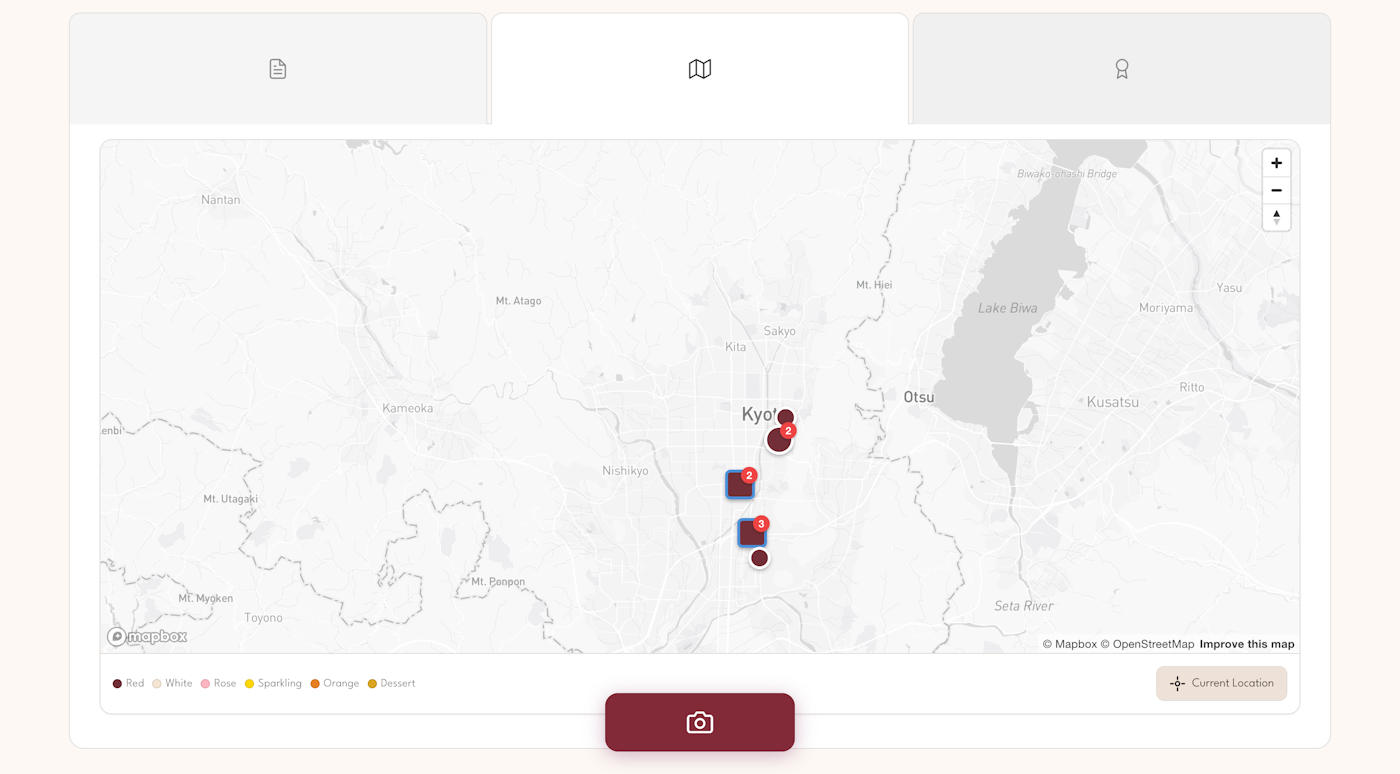
・Pin the place and save
That turns “the red I drank at that place” into something you can actually search for later.
Not a photo. A query.
And when you revisit, it’s not just the bottle you get back—
it’s the map, the location, the context.
Home drinking fades even faster, because the memory has less “scene” attached to it.
The detail that disappears first is usually: where you bought it.
But that’s the difference between:
“I liked it once”
and
“I can get it again.”
When the purchase place (or store) is recorded, “buy again” becomes a direct action instead of a vague hope.
Too detailed, you stop logging.
Too shallow, it’s useless.
The sweet spot is the whole game.
This is why the topic belongs on do-and-coffee.
Coffee has identical constraints:
・Bean and roaster names are long and easy to forget
・The reason you want to revisit often fits in a single sentence (or less)
・Photos alone don’t preserve the answer
So the design principles transfer cleanly:
Drink logging isn’t about writing a diary.
It’s about building retrieval keys.
When I touched PourPin, what stood out wasn’t “wine features.”
It was that the minimum unit of record is well-designed.
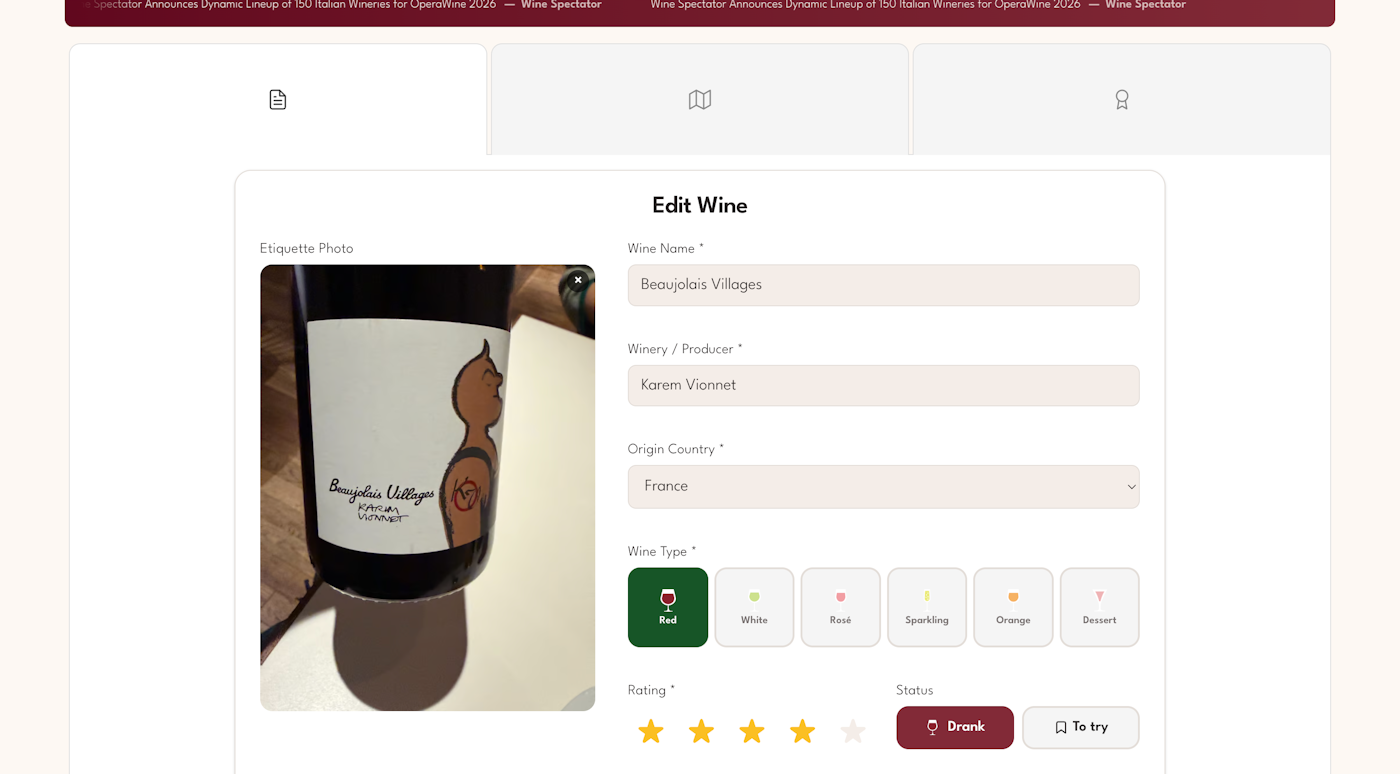
OCR running in the background means you don’t feel the “I have to type” burden.
Speed is the point. Logging is a race against forgetting.
Not too many fields.
But enough that “later search” actually works.
That balance is rare.
Searching by where turns memory into a map.
It doesn’t just store the drink—it stores the moment in a retrievable structure.
If the label is hard to read, it will miss.
But because edits are possible later, it’s not fatal—capturing the moment is still valuable.
This is not “wisdom of the crowd.”
If you want to browse other people’s scores, this won’t scratch that itch.
That’s not a bug. It’s a choice.
If you want to write essays, you might feel constrained.
But most people don’t keep essay logs.
PourPin optimizes for the reality that continuity beats perfection.
The interesting part of PourPin is not “it’s a wine app.”
It’s the idea that experiences should be designed to be revisitable.
do-and-coffee readers live at the intersection of coffee, creativity, and technology.
Record design belongs in that intersection.
This is less about wine, and more about:
How do we capture lived experiences in a way that stays useful?
Photos remain.
Answers don’t.
That’s why products built around minimal revisit logs have real value.
PourPin is one example of that design done well.
If this resonates, the next step isn’t “log more.”
It’s simpler:Decide the minimum granularity that makes your coffee experiences searchable—and keep only that.
Try it $0.00
pourpin.fun
Get notified about new articles, coffee tips, and Web3 insights.
This site participates in affiliate programs and may earn a commission when a link is clicked and a purchase is made. The site is not responsible for any issues or troubles related to the products or services purchased through the use of this site.
DO&COFFEE loves coffee and technology, exploring the potential of NFTs and blockchain. Learn more →
DO&COFFEE loves coffee and technology, exploring the potential of NFTs and blockchain. Learn more →